
Registration of public notification
If you register your e-mail address, we will notify you when the latest issue is published. If you wish, please register from the registration form. To delete your registration, please visit here.

October 2026 No.103
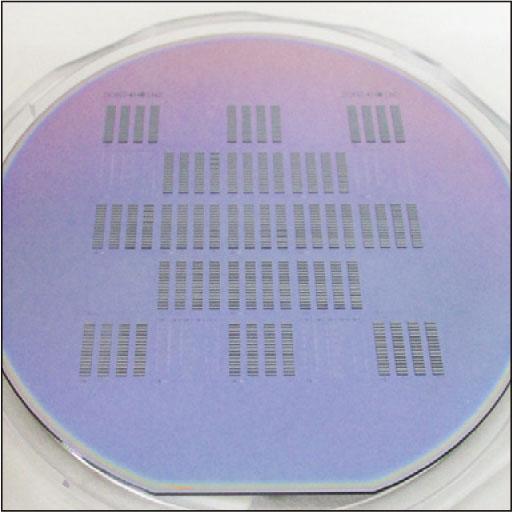
With the development of various IoT applications and AI technologies, data traffic has been rapidly increasing. The data rate required for a single transceiver is expected to reach the 10 Tb/s class in 2030. On the other hand, single-material photonic devices that support optical communication systems are beginning to show limitations in simultaneously achieving high bandwidth and low power consumption for multi-Tb/s-class data transmission, necessitating a technological breakthrough. Heterogeneously integrated photonic devices combine the advantages of two key technologies. First, III-V compound semiconductors, which provide high-speed and high-efficiency operation. Second, silicon photonics, which enables high-density integration through device miniaturization. By leveraging both advantages, these devices make a promising approach to overcome the inherent limitations. In this paper, we introduce heterogeneous integration technology using a chip-on-wafer bonding process. We also report on wavelength-tunable lasers, Mach-Zehnder modulators, and photodetectors utilizing the benefits of heterogeneous integration.
3.7 MB
3.7 MB
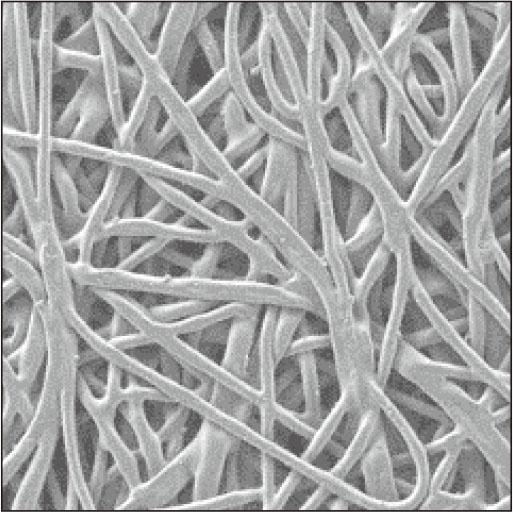
Nickel Celmet, a product of Sumitomo Electric Toyama Co. Ltd., is a porous metal featuring a three-dimensional network structure. We have been investigating the application of Celmets as porous transport layers (PTLs) for anion exchange membrane (AEM) water electrolysis and have previously reported that it enables high cell performance. However, further studies have indicated that, depending on the cell configuration, performance can be improved by using PTLs with denser structures than Celmets. In this work, we developed a felt-type Celmet for use in such cells. The resulting material combines the advantages of both conventional Celmet and metallic felt, and its properties are reported here.
1.8 MB
1.8 MB
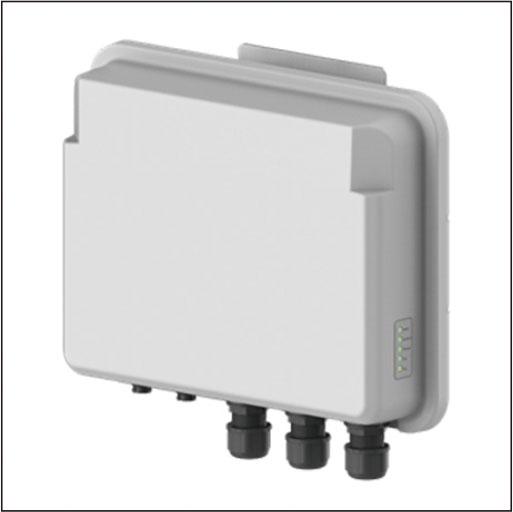
Our company has been shipping the industrial 5G terminal IGW5111. As demand for performing AI functions through edge processing is expected to increase, we developed an AI-equipped 5G terminal capable of supporting such functions. As part of the Cross-ministerial Strategic Innovation Promotion Program (SIP) Phase 3/Development of Smart Mobility Platform, we aimed to automatically improve the performance of image detection AI used for pedestrian detection at intersections. Through demonstration experiments, we verified the effectiveness of the algorithm and edge processing. Furthermore, we verified the usefulness of edge processing in improving safety in factories.
5.6 MB
5.6 MB
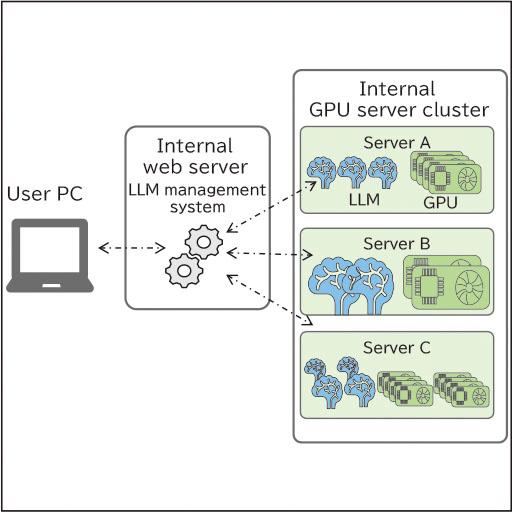
In recent years, with the rapid development of AI technologies, the utilization of AI in companies and research institutions has increased significantly. In particular, the expansion of Large Language Models (LLMs) for text generation has been prominent. To mitigate the risk of leaking confidential information, such as customer data and intellectual property (e.g., invention ideas), we are developing an integrated platform for local LLMs that operate on internal servers. In this environment, requests are sent from user PCs to internal servers, and inference is executed using computing resources on the internal servers, thereby realizing secure use of LLMs entirely confined within the company. Furthermore, we report that by sharing computing resources including GPUs, building client-based tools, and implementing custom application development environments via APIs, we have contributed to improving business efficiency and shortening research and development cycles while maintaining security.
1.1 MB
1.1 MB
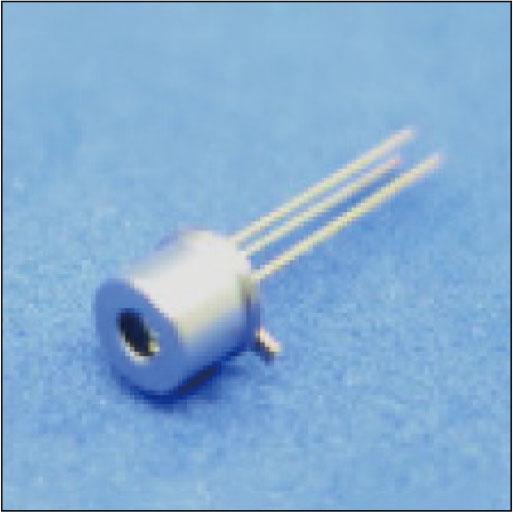
Self-driving taxis are beginning to become popular in major cities. In the future, autonomous driving is expected to expand mainly in logistics and enter our everyday lives more closely. ToF-LiDAR, which is an essential sensor for autonomous driving, is required to achieve both a longer detection range and laser safety, as well as stronger environmental robustness in outdoor settings. Although the 1550-nm band is advantageous for laser safety, its detection range has so far been limited by the lack of low-noise photodetectors. Therefore, we developed a low-noise avalanche photodiode (APD) using an antimony (Sb)-based material in the multiplication layer. In this work, we report results from a comparative evaluation of detection distance and sunlight resilience, considering system SNR, between the existing 905-nm band and the 1550-nm band equipped with the Sb-APD.
1.5 MB
1.5 MB
To contribute to achieving carbon neutrality by 2050, we promoted the use of biomass-based insulating materials for UL-compliant electrical wires widely used in consumer applications, focusing on both 125°C and 80°C rated wires. For 125°C rated wires, we targeted the reinforcing filler and examined the application of biomass inorganic fillers. To suppress the decrease in tensile strength and elongation under high filler loading, we controlled the crystallinity of the base resin to enhance interactions with the filler, and used scallop shell fillers with controlled particle morphology, which enabled compliance with UL standards. For 80°C rated wires, we incorporated biomass content by utilizing plant-derived oils as plasticizers. As a result, we successfully commercialized UL-compliant biomass electrical wires rated for both 125°C and 80°C.
2.5 MB
2.5 MB
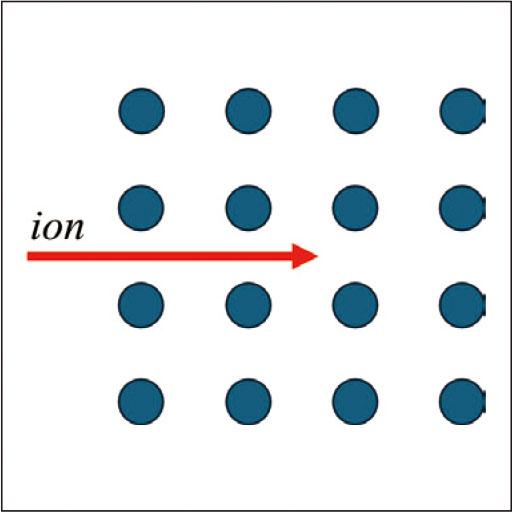
Nissin Ion Equipment Co., Ltd. developed an ion implanter system capable of high-precision channeling for power devices. Channeling implantation is a technique that allows deeper implantation of ions by implanting them along a particular direction of the crystal lattice. This technique not only has the potential to replace parts of the conventional silicon carbide (SiC) power device process that uses a high-energy ion implanter, but also shows promise for significantly improving device characteristics. Our system precisely controls the implantation angle, enabling stable and repeatable channeling ion implantation.
1.7 MB
1.7 MB
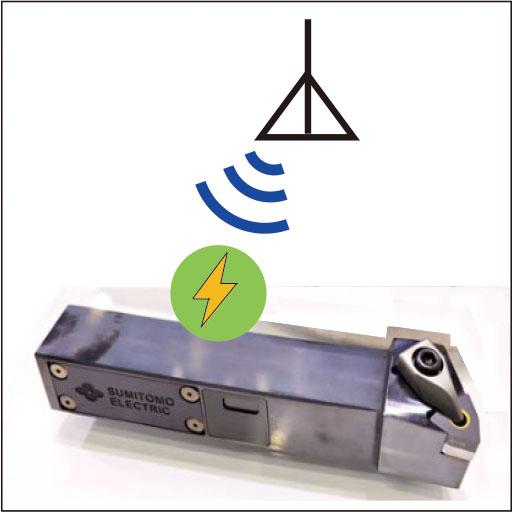
We are developing a sensing tool to monitor machining conditions during turning operations. Current sensing tools are powered by batteries, which pose operational challenges such as battery replacement managing. This study aims to power the sensing tool using wireless power transfer instead of batteries. We designed and evaluated a rectenna operating in the 5.7 GHz band, integrated into an aluminum housing that simulates a cutting tool. In an experiment conducted with a transmission power of 30 W and a transmission distance of 1,000 mm, the rectenna yielded a DC output power of 0.45 W, confirming that it is sufficient to operate the sensing tool.
4.4 MB
4.4 MB
In recent years, advancements in component precision have accelerated in fields such as the automotive industry and semiconductor manufacturing equipment. As a result, the demand for tools for small, automatic lathes used to machine precision parts has been increasing year by year. In particular, the adoption of stainless steel parts—known for their excellent durability and heat resistance—is on the rise. However, when machining stainless steels with high corrosion resistance, such as SUS316L, cutting tools tend to have a shorter tool life. This leads to challenges including higher tool costs and increased replacement frequency. This article introduces AC1135U, a new grade optimized for improving machining stability, extending tool life, and enhancing the quality of machined surfaces in stainless steel machining.
4.6 MB
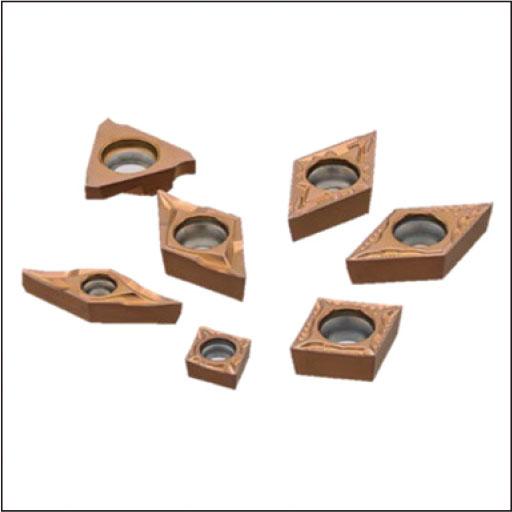
4.6 MB
In recent years, high-speed and high-productivity machining has rapidly expanded across the manufacturing industry to reduce machining costs and curb power consumption. At the same time, increasing use of rare-metal materials and rising tungsten prices have drawn attention to cermet cutting tools, which require less tungsten. Coated cermets are widely used, especially for finishing operations; however, as demands for higher speed and efficiency intensify, machining under severe cutting conditions is increasingly required. Because cermets generally have lower material strength than cemented carbide, they often lack sufficient chipping resistance in such harsh environments, leading to unstable performance and a limited application range. This paper introduces T2100Z, the latest-generation coated cermet grade developed to overcome these limitations.
5.3 MB
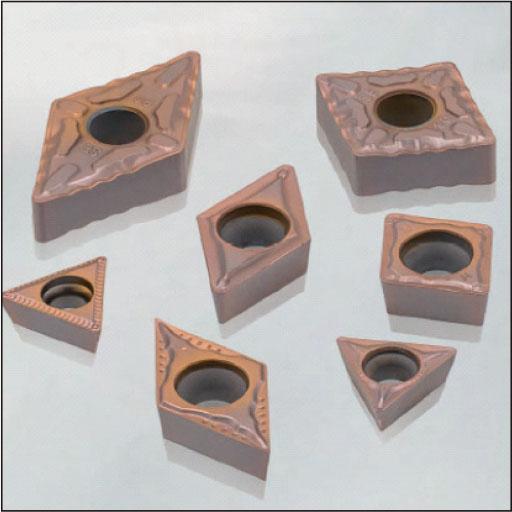
5.3 MB
In recent years, demands for miniaturization and improved energy efficiency in automotive motors and electronic components have intensified. One effective approach to these demands is increasing the space factor of coil windings by utilizing wires with non-circular cross-sections, which require shaped dies. However, achieving high precision for automotive applications and realizing ultra-small shaped dies suitable for miniaturized electronic components have been challenging with existing technologies. Therefore, A.L.M.T. Corp. has developed shaped dies made of diamond, achieving a high-precision hole diameter tolerance of ±1 μm and high-quality inner surfaces with surface roughness of Ra 10 nm for automotive use. For electronic components, A.L.M.T. Corp. has mass-produced ultra-small shaped dies with hole diameters ranging from 30 μm to 100 μm, and established a design methodology combining computer-aided engineering (CAE) simulation with actual wire drawing experiments. This paper reports these developments.
3 MB
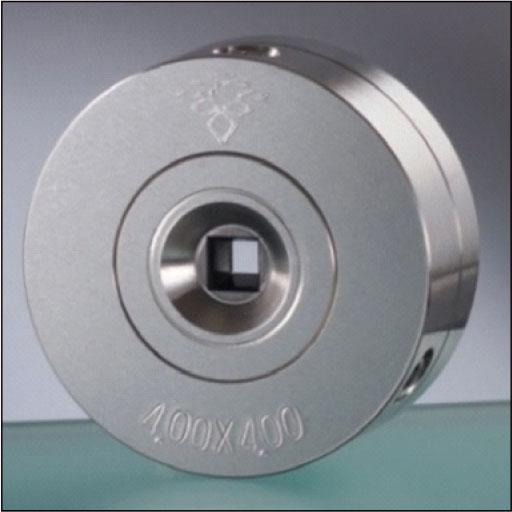
3 MB
A shielding material to protect superconducting coils of fusion reactors from radiation faces the challenge of limited space, thus necessitating the development of materials with superior shielding performance. Tungsten-boron (W-B) compounds exhibit excellent shielding performance, but suffer from low fracture toughness. In this study, A.L.M.T. Corp. aimed to enhance the mechanical properties, particularly fracture toughness, by adding carbon (C) to W-B compounds. The shielding performance was evaluated using the Monte Carlo particle transport simulation code PHITS. The fabricated materials were characterized by measuring density, Vickers hardness, and fracture toughness. This report details the shielding performance and various properties of the developed material.
1.2 MB
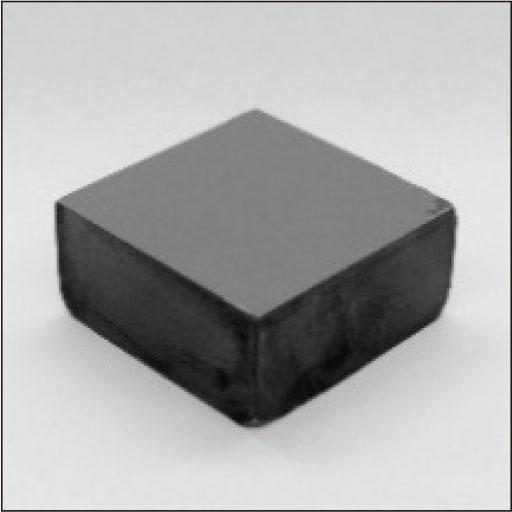
1.2 MB
With the expanding introduction of renewable energy, stabilizing the power grid and securing balancing capacity have become critical challenges. Grid-scale storage batteries are being introduced as equipment that contributes to stable grid operation by charging during renewable energy surplus and discharging during supply-demand tightness. Their operation requires an energy management system (EMS) that coordinates with markets and controls multiple sites. Sumitomo Electric’s EMS, Sumitomo Energy Management System Architecture (sEMSA), has been delivered to a wide range of aggregators as a virtual power plant (VPP) system responsible for power supply-demand balancing, building a strong track record.
0.8 MB
The high-frequency bands used for millimeter-wave radar and data communication originally designed for vehicle collision avoidance and distance control are expected to see expanded use in order to support the high-precision sensing and high-speed communication required to improve safety and accelerate the popularization of software-defined vehicles (SDVs). Existing substrate materials for high-frequency antennas exhibit significant transmission loss above 20 GHz, driving a growing demand for next-generation materials optimized for high-frequency signal transmission and reception. Sumitomo Electric Printed Circuits, Inc. and Sumitomo Electric Industries, Ltd. have developed FLUOROCUIT, an advanced high-frequency substrate that leverages the low-dielectric properties of fluororesin—a low-dielectric-constant material—as its substrate material.
1.7 MB
Cast iron is widely used, particularly in the automotive industry. Gray cast iron is applied to engine blocks and brake discs that require sliding properties, while ductile cast iron is used for parts such as differential cases and carrier cases that require high strength. In recent years, for improved fuel efficiency through weight reduction, wall thicknesses have been reduced and strength has been increased, leading to an increased adoption rate of high-strength ductile cast irons with a strength of FCD500 or higher. Due to the increase in workpiece strength, cutting tools require greater wear resistance than before. The newly developed AC4115K grade for cast iron turning features a newly developed CVD coating and a high-hardness substrate, demonstrating excellent wear resistance, especially in continuous machining of highstrength ductile cast iron. This extends tool life, thereby significantly contributing to reducing machining costs.
1.3 MB
Copyright of the paper contained in SUMITOMO ELECTRIC TECHNICAL REVIEW belongs to Sumitomo Electric Industries, Ltd.
The paper is to be used solely for private, reference purpose, and reproduction without the permission of the copyright holder is prohibited.
Meet the Authors of the SUMITOMO ELECTRIC TECHNICAL REVIEW
We at Sumitomo Electric Group are driven to pursue technological innovations to create value for a better world.
Learn more