Featured Stories
The Role of Long Duration Energy Storage (LDES) and Flow Batteries
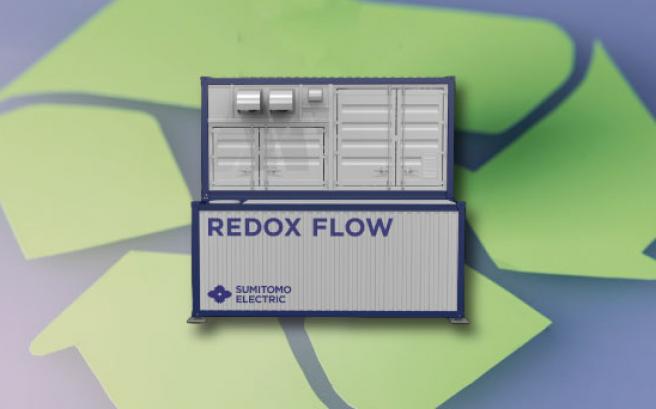
As renewable energy grows in the U.S., the need for reliable, long-duration storage is becoming urgent. Flow batteries, especially vanadium redox flow batteries (VRFBs), offer a safe, scalable, and sustainable technology to complement lithium-ion and help achieve national energy goals.
◇ What is LDES?
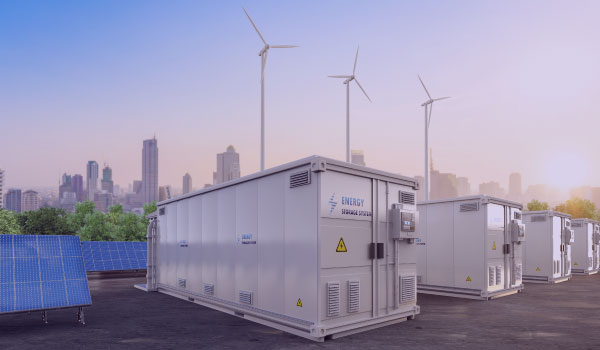
According to the U.S. Department of Energy (DOE), Long Duration Energy Storage (LDES) refers to technologies capable of discharging for 10 hours or more. As renewable energy grows, the challenge is not only adding solar and wind capacity, but also ensuring reliable power supply when the sun isn’t shining and the wind isn’t blowing. LDES technologies are critical to enabling a resilient, decarbonized grid.
◇ Main Categories of LDES Technologies
LDES covers a variety of approaches. Each has its own strengths and limitations.
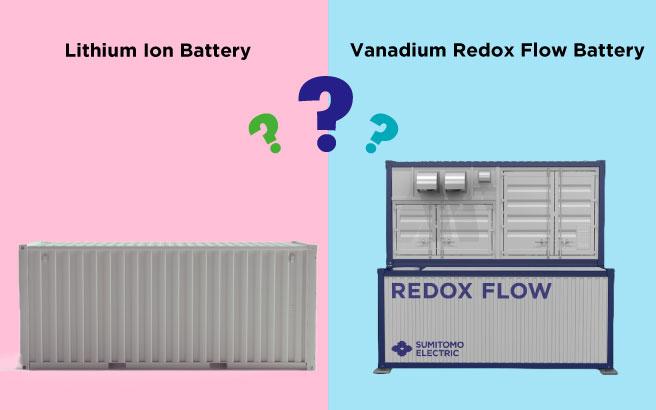
- Lithium-ion batteries
Today’s most widely used technology, best suited for 2–4 hours of discharge.
Safety and degradation continue to be challenges for longer durations.
- Pumped hydro
Large-scale and proven, but constrained by geography and long permitting times.
- Compressed air & thermal storage
Promising concepts under development, but commercial adoption is still limited.
- Flow batteries
Store energy in liquid electrolytes. Known for long life, safety, and scalability.
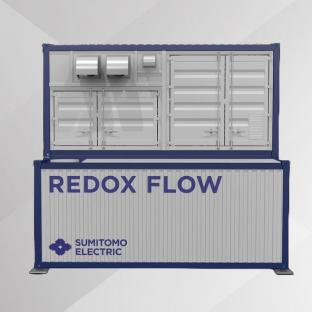
→ Sumitomo Electric’s Vanadium Redox Flow Battery (VRFB) belongs to this category.
◇ How Flow Batteries Work
Flow batteries are different from lithium-ion, which store energy in solid electrodes. Instead, they use liquid electrolytes stored in external tanks that circulate through cell stacks to charge and discharge.
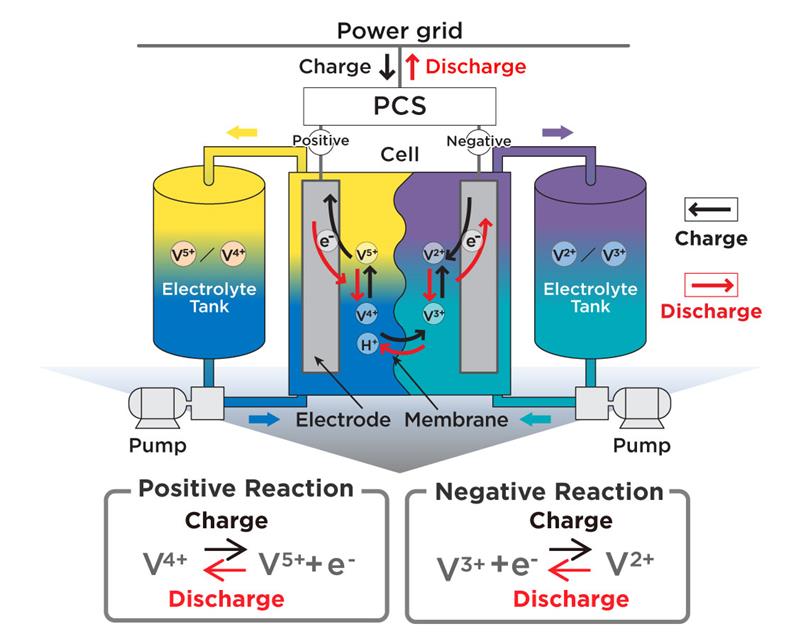
- Electrolyte tanks: Store positive and negative electrolytes. Increasing tank size expands total energy capacity (MWh).
- Cell stacks: Pumped electrolytes flow through stacks, where redox reactions occur to generate or store electricity. Adding stacks increases system power (MW).
- Vanadium chemistry: Vanadium can exist in multiple oxidation states, so both electrolytes use the same element. This minimizes cross-contamination and supports long life.
Key Benefits
- Flexible design: Scale power and energy independently.
- Long lifetime: Over 30 years of operation with minimal degradation.
- Safety: Aqueous, non-flammable electrolyte means no thermal runaway risk.
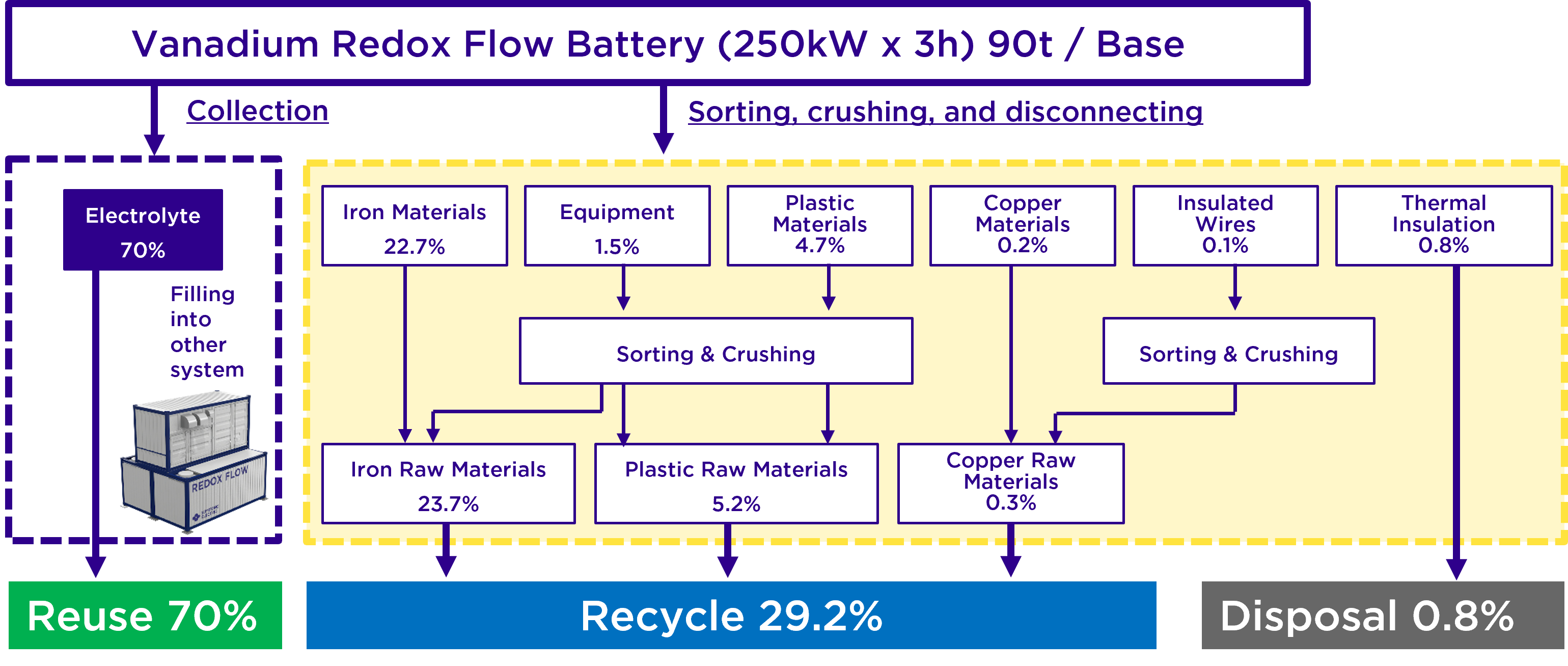
- Sustainability: Electrolyte can be reused and recycled, supporting circular economy goals.

According to NREL’s report “Battery Storage Unlocked: Lessons Learned from Emerging Economies”, redox flow batteries feature flexible design and minimal degradation, making them most suitable for long-duration energy storage (LDES).
◇ Sumitomo Electric’s Track Record
Sumitomo Electric has been a pioneer in commercializing VRFBs:
- First utility-scale VRFB in the U.S. (San Diego, 2017): 8 MWh system connected to CAISO, serving as a community microgrid with black-start capability.
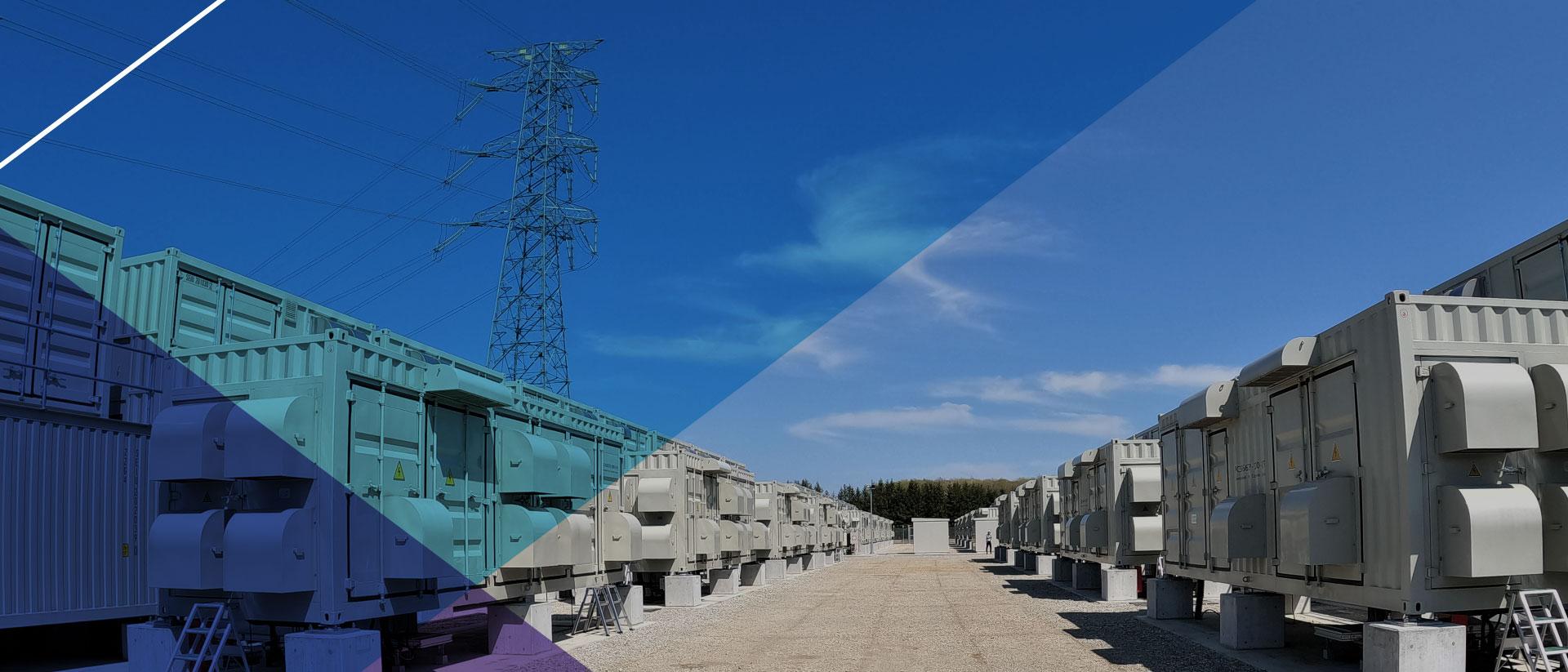
- Large-scale projects in Japan: 60 MWh (2015) and 51 MWh (2022) systems in Hokkaido, stabilizing wind power integration.
- Global deployment: As of 2025, 49 projects across 7 countries, totaling 52 MW / 190 MWh, with an additional 44 MWh awarded.
Next-Generation VRFB – Lower Cost, Higher Value
- 15% higher energy density → smaller footprint.
- 30% cost reduction through design and manufacturing improvements.
- 30-year lifetime enabled by long-life materials and low-maintenance design.
The DOE has set a cost target for LDES of $0.05/kWh or less. Our next-generation VRFB is designed to help achieve this benchmark.
◇ Why It Matters for the U.S. Market
- LDES stakeholders
Flow batteries, validated through Sumitomo Electric’s global deployments, are among the most technically mature and operationally proven LDES technologies. They deliver long-duration energy at scale with minimal safety risks and little degradation, aligning with DOE’s targets for affordable and reliable storage.
- Utilities
Sumitomo Electric has demonstrated performance through its San Diego project, the first utility-scale VRFB in the U.S. Operating since 2017 on the CAISO grid, it provides peak shaving, renewable firming, black-start capability, and microgrid support, achieving more than 99% availability.
- Remote & Microgrid operators
VRFBs are well-suited for isolated communities and critical facilities, offering safe, non-flammable long-duration backup. In Cameron Corners, California, a 4 MWh system scheduled for operation in 2025 will secure power during Public Safety Power Shutoffs and support black-start functionality to enhance resilience.
- Commercial & Industrial users (C&I)
For commercial and industrial facilities, VRFBs reduce reliance on diesel generators, manage peak demand, and ensure sustainable long-term backup. With lifespans over 20 years and recyclable, non-flammable electrolytes, these systems support both operational continuity and decarbonization goals.
◇ Conclusion
While lithium-ion batteries remain today’s mainstream solution, flow batteries offer the safety, durability, and scalability needed for the future of long-duration energy storage. With decades of experience and continuous innovation, Sumitomo Electric is committed to supporting the U.S. in building a resilient, decarbonized energy system.
References:
- U.S. Department of Energy (DOE). (2023, June). Long Duration Energy Storage (LDES) Program. Office of Clean Energy Demonstrations.
Retrieved from https://www.energy.gov/oced/long-duration-energy-storage
- LDES Council. (2021, November). Long Duration Energy Storage Use Cases: A Primer on Applications to Aid Technology Selection. LDES Council.
Retrieved from https://www.ldescouncil.com/assets/pdf/3002030919_LongDurationEnergyStorageUseCases_APrimeronDefiningApplicationstoAidinTechnologySelection.pdf
- National Renewable Energy Laboratory (NREL). (2023, March). Moving Beyond 4-Hour Li-Ion Batteries: Expanding Energy Storage Duration in U.S. Markets. U.S. Department of Energy, NREL/TP-6A40-85878.
Retrieved from https://docs.nrel.gov/docs/fy23osti/85878.pdf
- National Renewable Energy Laboratory (NREL). (2025, February). Battery Storage Unlocked: Lessons Learned from Emerging Economies. U.S. Department of Energy, NREL/TP-6A40-91781.
Retrieved from https://docs.nrel.gov/docs/fy25osti/91781.pdf
Follow us on LinkedIn!
If you enjoyed this Feature Story, be sure to follow Sumitomo Electric U.S.A on LinkedIn. We share updates there whenever new stories are published. (Note: Sumitomo Electric Group also has a global LinkedIn account for corporate updates.)