Featured Stories
Energy Storage Safety, Permitting, and Project Risk: What Is Changing?
Energy storage projects are increasingly being evaluated on more than performance and cost alone. As deployment grows, safety, permitting, and community acceptance are becoming important factors that can influence project timelines and development risk. At the same time, industry standards such as UL 9540A and NFPA 855 continue to evolve, placing greater emphasis on how energy storage systems are evaluated and how safety is demonstrated during project development. This article explores how safety considerations are changing, why they matter for permitting and project execution, and how different storage technologies are being evaluated in today's market.
Safety Is No Longer Just a Technical Topic
Historically, energy storage projects were often evaluated primarily based on technical performance, economics, and operational requirements. Today, project development teams must also consider permitting requirements, stakeholder engagement, and how safety is communicated throughout the approval process.
According to discussions presented by American Clean Power (ACP), permitting and community acceptance have become important considerations for energy storage projects in many jurisdictions. Even when a project is technically feasible, permitting requirements, local review processes, and stakeholder concerns can influence project schedules and development timelines.
This shift reflects a broader change in how projects are evaluated. The question is no longer limited to whether a technology can meet performance requirements. Increasingly, project teams must also demonstrate how safety is addressed throughout the life cycle of the project.
Recent Standards Reflect a Shift in Safety Evaluation
The evolution of industry standards provides another indication of how energy storage safety evaluation continues to develop.
According to UL Solutions, UL 9540A is a test method used to evaluate thermal runaway fire propagation in battery energy storage systems. UL also states that the methodology evaluates system behavior at the cell, module, unit, and installation levels.
According to SGS, the 6th Edition of UL 9540A introduces updates related to consistency in testing and expanded evaluation requirements, including installation-level testing and hazard assessment.
Similarly, NFPA 855 continues to serve as a key standard for the installation of stationary energy storage systems, including requirements related to hazard mitigation analysis, emergency response planning, and fire safety considerations. Together, these updates show that energy storage safety evaluation is being further defined through recognized standards and testing frameworks.
Why Safety Can Influence Project Timelines
Safety considerations can also affect project execution. As discussed in our article Why Interconnection Delays Are Becoming a Bigger Risk Than Technology Choice, project delays can have significant impacts on financing, construction schedules, contractual obligations, and commercial operation dates. While interconnection remains one source of delay, permitting-related challenges can also affect project timelines.
According to ACP discussions on energy storage permitting, project developers increasingly face complex approval processes that may involve local authorities, emergency responders, utilities, and community stakeholders. Building alignment among these groups can require significant time and resources.
As a result, safety is increasingly viewed not only as an engineering consideration, but also as an important component of project risk management.
Evolving Criteria for Storage Technologies
As safety evaluation becomes more comprehensive, the criteria used to assess storage technologies are also evolving.
In addition to traditional performance metrics, project teams may evaluate:
- Fire propagation behavior
- Hazard mitigation strategies
- Emergency response considerations
- Compliance with applicable standards
- Long-duration operational requirements
These factors do not replace traditional technical and economic considerations. Rather, they add another dimension to project evaluation.
As standards continue to evolve, understanding how different technologies are assessed under these frameworks is becoming increasingly important.
Where Flow Batteries Fit
Different energy storage technologies have different operating characteristics and safety profiles.
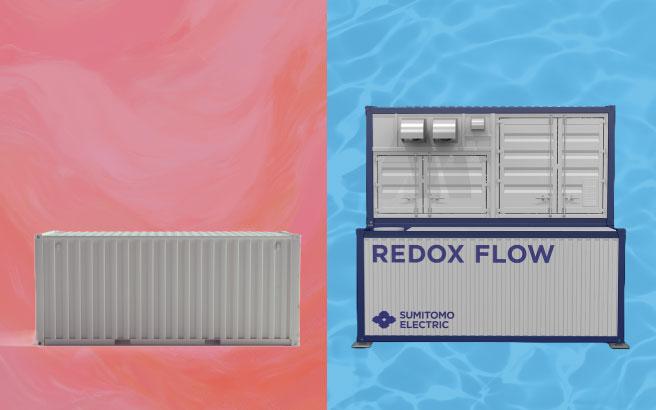
Vanadium redox flow batteries (VRFBs) use water-based, non-flammable electrolytes and do not rely on thermal runaway mechanisms for energy storage.
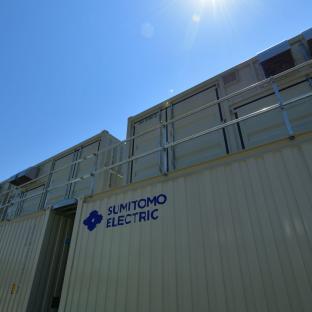
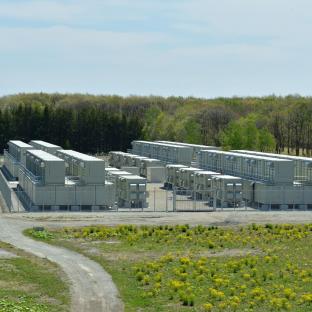
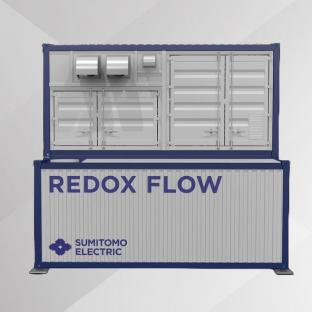
As a result, VRFBs are sometimes considered in projects where safety, permitting certainty, and long-duration operation are important evaluation criteria. Sumitomo Electric's VRFB systems are UL 1973 certified and utilize non-flammable vanadium electrolyte technology.
As industry standards and permitting requirements continue to evolve, understanding the safety characteristics of different storage technologies is becoming an increasingly important part of project evaluation and development planning.
Conclusion
Energy storage safety is no longer viewed solely through the lens of technical performance.
As permitting requirements evolve and industry standards continue to develop, safety considerations are increasingly influencing how projects are evaluated, approved, and developed.
Project stakeholders are now required to consider not only performance and economics, but also how safety is assessed, communicated, and incorporated into project planning.
Industry standards such as UL 9540A and NFPA 855 provide structured frameworks for evaluating energy storage systems, helping stakeholders better understand technology characteristics and safety considerations.
As the energy storage market continues to grow, safety will remain an important factor in project development, permitting, and long-term project success.
References
- UL Solutions. (n.d.). Large-Scale Fire Testing and UL 9540A. Retrieved from https://www.ul.com/services/large-scale-fire-testing-and-ul-9540a
- SGS. (2026, May 11). Navigating the Shift: Key Technical Updates in UL 9540A 6th Edition. Retrieved from https://www.sgs.com/en/news/2026/05/safeguards-06826-navigating-the-shift-key-technical-updates-in-ul-9540a-6th-edition
- American Clean Power. (n.d.). NFPA 855: Improving Energy Storage System Safety. Retrieved from https://cleanpower.org/resources/nfpa-855-improving-energy-storage-system-safety/