Featured Stories
Why Interconnection Delays Are Becoming a Bigger Risk Than Technology Choice
As energy storage and power generation technologies mature, a different risk is increasingly shaping project outcomes. In many cases, interconnection delays are now more disruptive than technology selection itself.
Rather than asking which technology performs best, developers and operators are more often asking when power can actually be used, and how systems can operate before grid connection is complete. This article explores how interconnection delays are changing project planning, and how those changes are influencing the way storage and on-site power solutions are evaluated.
◇ Interconnection Delays Are No Longer an Exception
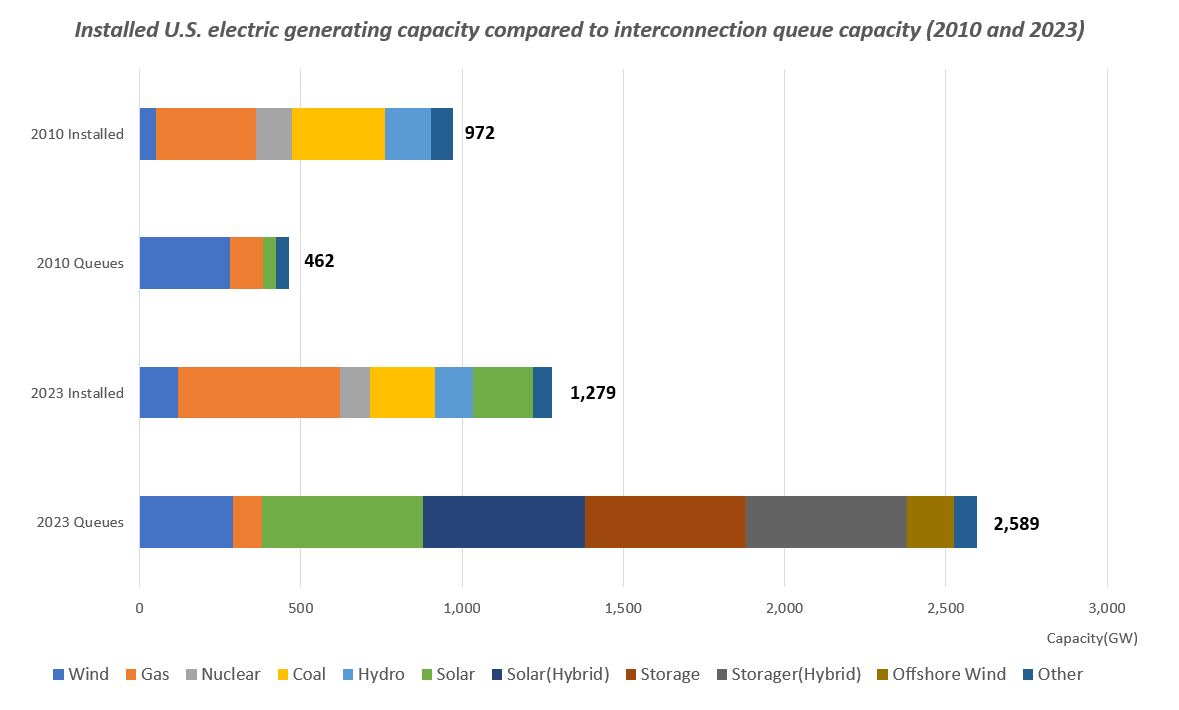
Interconnection was once treated as a procedural step within a broader project timeline.Today, it is often the most uncertain and time-consuming part of project development.
Across renewable energy, storage, and data center projects, developers are facing:
- Longer interconnection queues
- Delays related to grid upgrades and transmission availability
- Uncertain timelines for final grid connection
As a result, projects can be technically ready but unable to operate as planned.
According to Lawrence Berkeley National Laboratory (LBNL), interconnection backlogs and delays have become a significant barrier for new power plants in the United States. The study highlights that many projects face multi-year timelines before securing grid connection, even after construction is complete, increasing uncertainty for developers and investors.

◇ Why Timing Is Becoming More Critical Than Technology Choice
The range of available storage and power technologies continues to expand, and performance differences are well understood. However, the timing of grid access is increasingly determining project success or failure.
Interconnection delays can affect:
- Commercial operation dates
- Contractual obligations such as PPAs
- Financing and investment decisions
In this environment, flexibility around when and how power can be used is often more important than marginal differences between technologies.
◇ When Projects Are Ready Before the Grid Is
It is becoming more common for facilities and equipment to be completed before grid connection is available.
This situation is particularly visible in projects such as:
- Renewable energy sites with co-located storage
- Data centers with large and growing power demand
- Projects designed for phased or incremental commissioning
In these cases, power infrastructure exists, but full grid access does not. Planning assumptions are shifting to reflect that reality.
◇ From Temporary Power to Long-Term Planning
Traditionally, temporary power solutions were viewed as short-term measures for emergencies or construction periods. That perspective is changing.
As interconnection delays become a known risk, projects are increasingly planned around on-site operation that begins before grid connection and continues afterward. This includes:
- Phased commissioning strategies
- Behind-the-meter operation prior to interconnection
- Microgrid-style configurations that remain useful after grid connection
In this context, the focus is no longer on short-term substitution, but on solutions that can be deployed early and remain valuable over the long term.
◇ LDES as an Infrastructure Element and What This Means for Storage Solutions
When grid access is delayed, the ability to operate independently for extended periods becomes more valuable, shifting attention toward longer-duration solutions. Against this backdrop, long-duration energy storage is increasingly viewed not only as a longer-running battery, but as an infrastructure element that supports system-level planning.
This broader view of long-duration energy storage is also reflected in recent policy and system-level discussions. According to the Center for Climate and Energy Solutions (C2ES), LDES is increasingly being evaluated not only as a storage technology, but as an infrastructure asset that can support grid reliability, resilience, and long-term system planning as power systems evolve.
In recent discussions, LDES is being associated with several roles:
- Managing grid constraints
Supporting supply and demand balance while generation or transmission upgrades are pending
- Enhancing reliability and resilience
Addressing risks related to extreme weather and extended supply disruptions
- Supporting new demand, especially data centers
Enabling earlier operation when interconnection delays would otherwise slow deployment.
As these roles expand, the criteria used to evaluate storage and power solutions are also evolving. Under grid-constrained conditions, decision makers are increasingly focused on whether a solution can:
- Operate continuously for many hours
- Cycle frequently over long periods
- Be deployed safely near critical on-site loads such as data centers
- Transition smoothly from pre-interconnection operation to long-term use
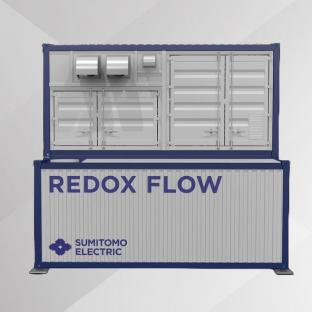
Within these conditions, technologies designed for long-duration operation are sometimes considered. Redox flow batteries are one example, as they are built for extended run times, frequent cycling, and use non-flammable, water-based electrolytes. These characteristics can be relevant for microgrid and on-site applications where operational endurance and safety are prioritized.
◇ Conclusion
Interconnection delays are no longer a temporary inconvenience. They are becoming a structural factor that shapes how projects are designed, financed, and operated.
As a result, storage and power solutions are increasingly evaluated not only on technical specifications, but on how well they perform under constrained grid conditions. In this environment, flexibility, duration, and long-term operational fit are becoming as important as technology choice itself.
References:
- Lawrence Berkeley National Laboratory. (2025, January 13). Grid Connection Barriers for New Build Power Plants in the United States. Retrieved from https://emp.lbl.gov/news/grid-connection-barriers-new-build-power-plants-united-states?
- Center for Climate and Energy Solutions. (2024, December 4). Taking the long view: Unlocking the Value of Long-Duration Energy Storage. Retrieved from https://www.c2es.org/2024/12/taking-the-long-view-unlocking-the-value-of-long-duration-energy-storage-2/
Follow us on LinkedIn!
If you enjoyed this Feature Story, be sure to follow Sumitomo Electric U.S.A on LinkedIn. We share updates there whenever new stories are published. (Note: Sumitomo Electric Group also has a global LinkedIn account for corporate updates.)