Featured Stories
Advances in Fire Suppression and Battery Safety in Lithium-ion and Flow Batteries
As large-scale battery energy storage systems expand across the United States, fire safety has become a mission-critical issue. Recent incidents at Moss Landing (CA) and Townsite Solar + Storage (NV) highlight the risks of lithium-ion systems, while vanadium redox flow batteries (VRFBs) are emerging as a fundamentally safer option for long-duration storage. This article compares the two technologies in terms of fire risk, suppression strategies, and regulatory compliance. (4 min read)
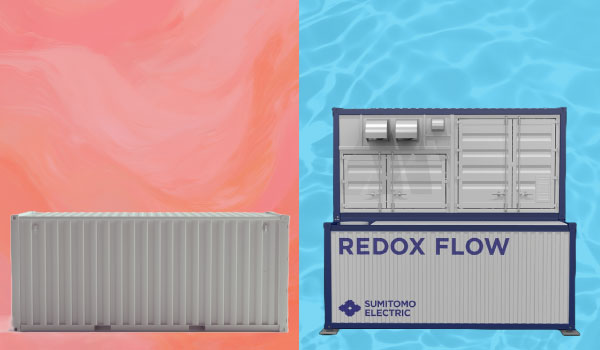
◇ Introduction: Why Fire Safety Matters in Energy Storage
Battery energy storage systems (BESS) are scaling rapidly across the United States, driven by the need to integrate renewables and improve grid resilience. But with this growth comes increased scrutiny of fire risks and thermal runaway incidents, particularly in large-scale lithium-ion deployments.
Recent fires at large-scale lithium-ion facilities, such as Moss Landing (CA) and Townsite (NV), have drawn attention to energy storage fire safety.
These incidents underscore a critical question: How can the industry ensure safe and bankable storage at scale? Comparing lithium-ion with emerging alternatives such as vanadium redox flow batteries (VRFBs) offers valuable insights.
◇ Lithium-ion: High Energy, High Risk
Lithium-ion batteries dominate today’s storage market due to their high energy density and declining costs. But their core chemistry brings inherent fire risks:
- Thermal runaway: Overcharging, mechanical damage, or cell defects can trigger chain reactions of heat and gas release.
- Difficult to extinguish: Fires can re-ignite hours later and often release toxic gases like HF and CO.
- Costly mitigation: Extensive suppression and monitoring systems are required to meet regulatory codes.
In January 2025, Moss Landing —one of the world’s largest lithium-ion BESS—experienced a fire that forced nearby residents to evacuate and triggered extensive air-quality monitoring. More recently, in September 2025, two Tesla Megapacks caught fire at the Townsite Solar + Storage project near Boulder City, Nevada, sending smoke visible for miles. These incidents underline the need for safer alternatives.
Recent experimental studies indicate that thermal runaway can propagate across cells and modules, making large facilities especially vulnerable. For example, a ScienceDirect study demonstrated how runaway events spread within modules, while an MDPI paper on aged LIB modules confirmed that higher state-of-charge conditions accelerate propagation. A Wiley Energy Technology analysis further quantified cross-talk and propagation dynamics in high-density module designs. These findings highlight that scale amplifies risk in lithium-ion deployments.
◇ VRFB: A Fundamentally Safer Chemistry
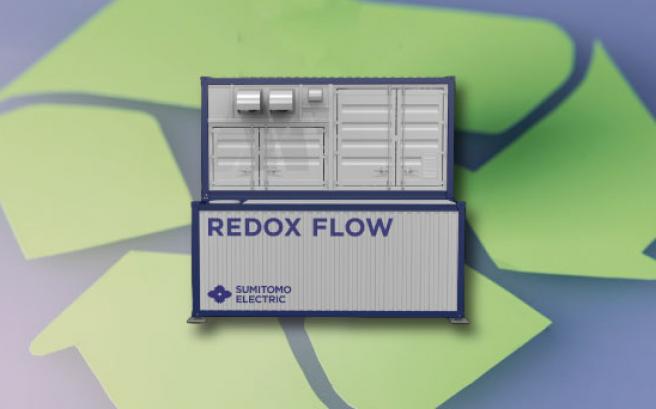
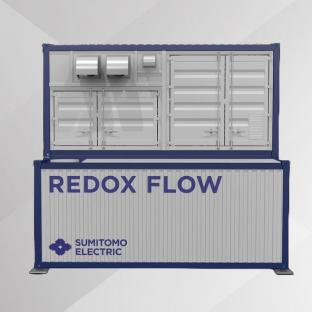
In contrast, VRFBs use aqueous vanadium electrolyte, which is non-flammable. Their architecture stores energy in external tanks, not in tightly packed cells. Key safety benefits include:
- No thermal runaway due to water-based electrolyte.
- Limited stored energy per cell stack, reducing the risk of rapid heat release.
- Lower propagation risk, meaning failures are easier to contain.
Independent assessments confirm these advantages. A DNV study of flow battery components showed lower combustion risks compared to lithium-ion materials (DNV). Another analysis in MDPI Electronics concluded that flow batteries present a safer regulatory pathway for long-duration energy storage (MDPI).
That said, VRFBs are not risk-free. Potential concerns include electrolyte leakage, hydrogen generation, and material corrosion, but these risks are generally manageable through design and monitoring, in contrast to the systemic fire hazards inherent to lithium-ion.
◇ Advances in Fire Suppression
To address lithium-ion risks, the industry is deploying increasingly sophisticated fire suppression measures:
- Water mist and aerosol systems to cool and suffocate fires.
- Inert gas flooding to lower oxygen concentration in enclosures.
- Thermal barriers and module spacing to slow fire propagation.
- AI-based monitoring using thermal imaging and off-gas sensors for early detection.
While these measures improve safety, they also add significant CAPEX, OPEX, and operational complexity. By contrast, VRFB systems generally require less extensive fire-specific infrastructure. While lithium-ion may retain an advantage in upfront capital costs, VRFB projects can benefit from lower long-term safety expenditures and simplified compliance, improving lifecycle economics.
◇ Regulatory Landscape in the U.S.
Fire safety is now embedded in standards and law:
- NFPA 855: Standard for the installation of stationary energy storage systems.
- UL 9540 / 9540A: Safety and fire propagation testing requirements.
- EPA Guidelines (2025): The EPA released new BESS safety guidelines, recommending stronger collaboration with fire authorities, enhanced monitoring, and fire preparedness plans.
- State-level codes: Following multiple incidents, states such as New York and California have introduced stricter fire safety codes for BESS projects.
For lithium-ion projects, meeting these standards often requires expensive suppression add-ons. VRFB systems, with their inherently lower fire risk, can simplify compliance—improving both project timelines and bankability
◇ Conclusion
As the U.S. transitions to cleaner energy, storage safety is a mission-critical factor—not just for regulators, but for utilities, investors, and communities.
- Lithium-ion delivers energy density and scale but requires expensive, complex suppression systems to mitigate its fire risks.
- VRFBs offer a safer, non-flammable solution for long-duration applications, aligning with emerging standards and lowering insurance and compliance hurdles.
By advancing fire suppression technologies while adopting inherently safer chemistries like VRFBs, the energy industry can build resilient, trusted storage infrastructure for the next generation of America’s grid.
References:
- Utility Dive. (2025). Moss Landing lithium-ion battery fire prompts evacuations and monitoring.
Retrieved from https://www.utilitydive.com/news/moss-landing-fire-battery-storage-industry-lithium/741283
- FOX 5 Vegas. (2025, September 23). Fire erupts at Boulder City lithium battery site; no injuries reported.
Retrieved from https://www.fox5vegas.com/2025/09/24/fire-breaks-out-solar-power-plant-boulder-city/
- EPA / CTIF. (2025). EPA releases new BESS safety guidelines amid rising fire concerns.
Retrieved from https://ctif.org/news/epa-releases-new-bess-battery-storage-safety-guidelines-amid-rising-fire-concerns
- DNV. (2024). Towards an improved scope for flow battery testing in North American safety standards.
Retrieved from https://www.dnv.com/article/towards-an-improved-scope-for-flow-battery-testing-in-north-american-safety-standards-part-3--249989
- MDPI Electronics. (2023). Redox Flow Batteries: A Glance at Safety and Regulation.
Retrieved from https://www.mdpi.com/2079-9292/12/8/1844
Follow us on LinkedIn!
If you enjoyed this Feature Story, be sure to follow Sumitomo Electric U.S.A on LinkedIn. We share updates there whenever new stories are published. (Note: Sumitomo Electric Group also has a global LinkedIn account for corporate updates.)