
Scalable DC/AI and Long-haul Networks with Multi-core Fiber
From Proven Fiber Technology to Next-Generation Optical Networks
Multi-core fiber is a proven platform for increasing fiber optic interconnection density today and a key technology for future AI and data center networks. By enabling space division multiplexing within a single fiber, MCF helps address growing challenges in scalability, cabling complexity, installation space, and power-efficient infrastructure design. Sumitomo Electric has developed the essential technologies required to bring MCF-based solutions into practical applications, including fiber, connectivity, and high-density optical interconnection technologies. At the same time, MCF opens a path toward future architectures requiring higher capacity, denser routing, and advanced integration over the next five to ten years. Sumitomo Electric is ready to support both today’s deployment needs and tomorrow’s optical network evolution.



17 Years
of Continuous MCF R&D
200+
Peer-reviewed MCF-related Publications
World 1st
Mass-produced Ultra-low Loss MCF
Sumitomo Electric’s long-standing MCF research has advanced core density and long-haul transmission performance, demonstrating sustained innovation and a scalable technology platform for the evolving needs of future optical networks worldwide.
Scaling Connectivity from Subsea Networks to Data Centers
Multi-core fiber (MCF) is expanding optical connectivity from commercial applications today to possibilities still emerging. In submarine networks, MCF enables spatial division multiplexing to increase transmission capacity while reducing cable volume and weight. In data centers, it supports higher-density interconnects by carrying multiple optical paths within a single fiber. Looking beyond today’s deployments, higher-core-count MCF, including 8- and 12-core designs, offers a scalable platform for new architectures and applications that may demand even greater fiber density and capacity.
Advancing SDM for Submarine and Terrestrial Long-haul Networks
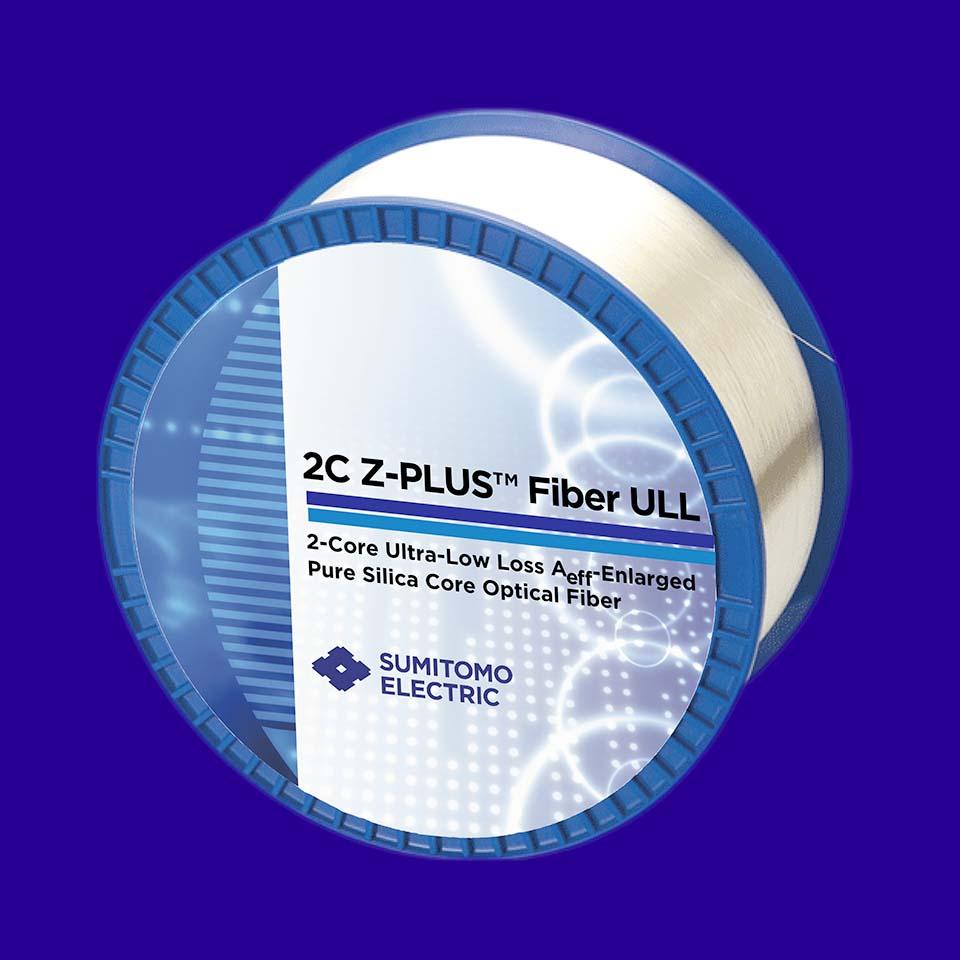
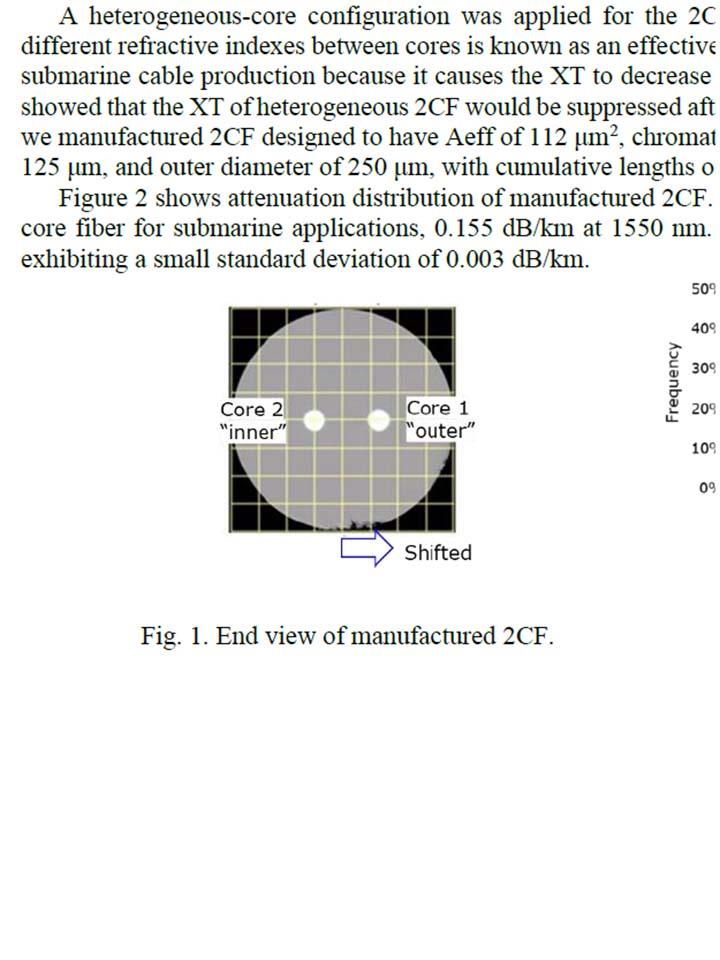
Ultra-low Loss and Aeff-enlarged Pure Silica 2-cores
-
World’s first mass-produced ultra-low loss multi core fiber
-
Attenuation of 0.155 dB/km and effective area of 112 µm² with standard 125 µm cladding diameter

Enabling Higher-density Interconnects for AI Data Center
4-core Fiber in 125µm Cladding Ready for Practical Deployment
-
Increasing transmission capacity while reducing cable volume, weight, and installation complexity
-
Enabling higher-density connectivity and more efficient and energy-saving infrastructure
-
Advancing interoperability through SDM4 MCF MSA collaboration and supporting customer-specific deployment requirements
Two Development Paths for Next-Generation Optical Networks
Scaling Interconnect Density with 8- and 12-core Uncoupled Fibers
for Short- and Medium-reach Applications
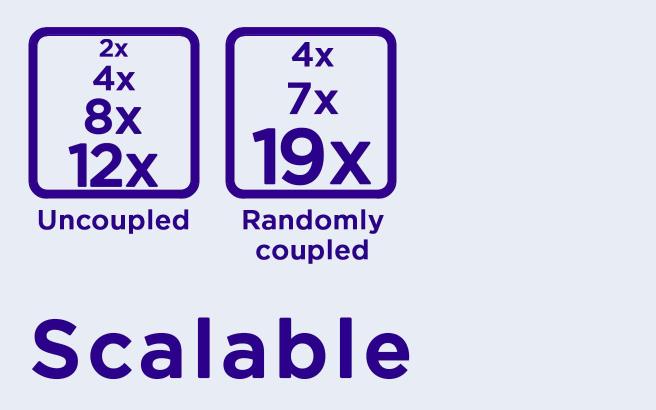
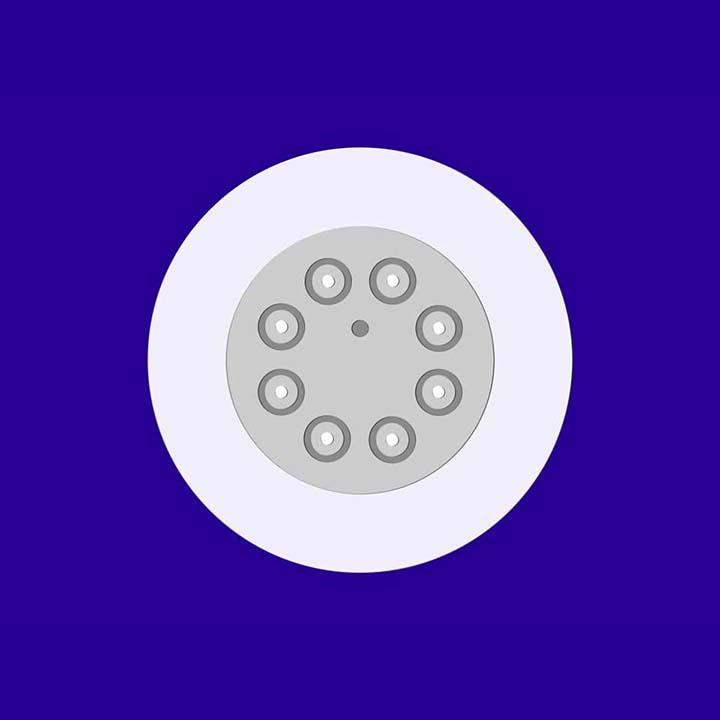
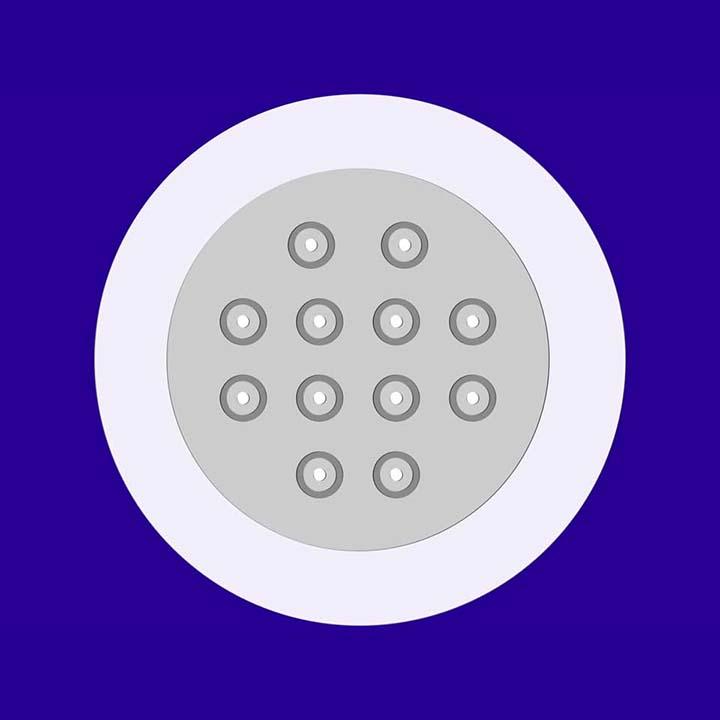
Our development of 8- and 12-core uncoupled fibers targets higher-density optical connectivity for future short- and medium-reach applications. By increasing the number of optical paths within a single fiber while controlling inter-core crosstalk, these designs aim to support growing interconnect requirements in AI data centers and emerging optical architectures.
-
Pushing MCF technology toward higher core counts, greater density, and enhanced optical performance
-
Turning advanced MCF research into practical, reliable technologies for tomorrow’s optical networks
-
Opening new frontiers in optical connectivity through the continued evolution of MCF


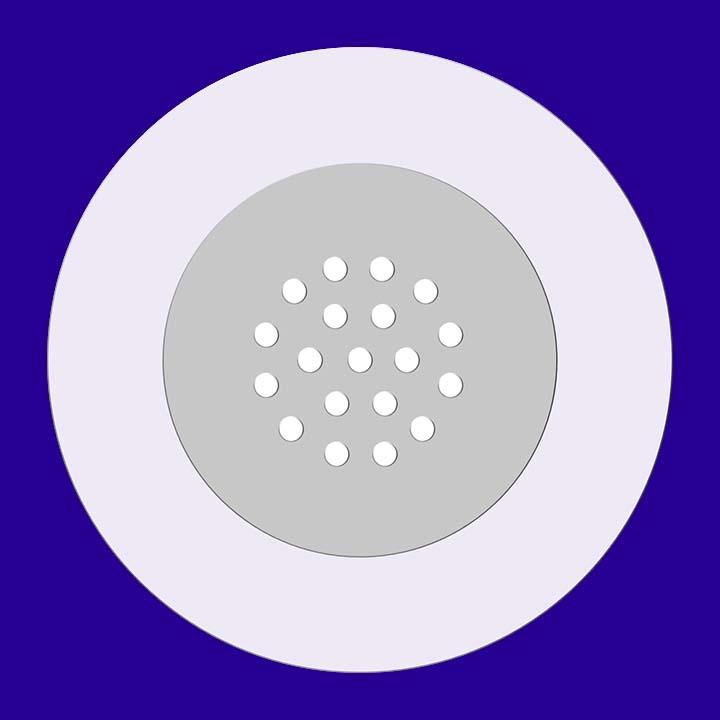
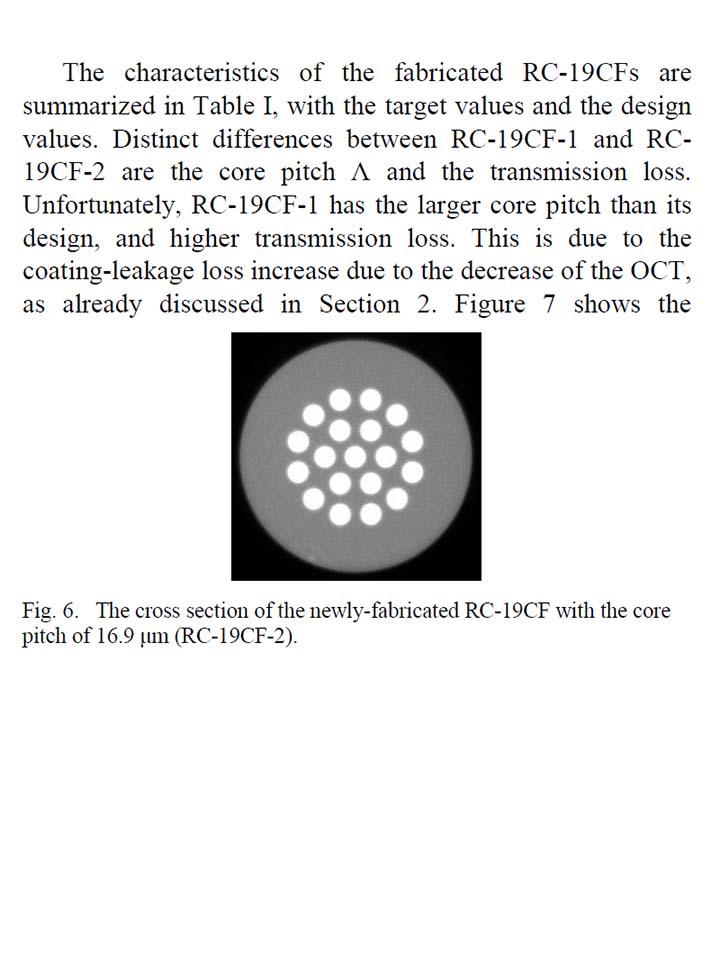
Advancing Long-haul Capacity with 4-, 7-, and 19-core Randomly Coupled Fibers
for Future Long-haul Optical Networks
Our research in randomly coupled 4-, 7-, and 19-core fibers explores a distinct path toward higher-capacity long-haul transmission. Designed for systems using multiple-input multiple-output (MIMO) digital signal processing, these fibers aim to support future terrestrial and submarine networks by enabling advanced signal recovery across densely arranged cores.
-
Higher-capacity long-haul transmission enabled by randomly coupled designs
-
Optimized for MIMO-based signal recovery between cores
-
Well suited for future terrestrial and submarine network applications
Everything You Need to Deploy Multi-Core Fiber Systems—From One Trusted Partner
Sumitomo Electric offers a comprehensive portfolio of technologies required to deploy reliable multi-core fiber systems. In addition to multi-core fiber itself, we provide in-house expertise in terrestrial and submarine multi-fiber cable design, connector integration, fusion splicing, and fan-in/fan-out devices that enable seamless connection between multi-core fiber and standard single-mode fiber. By bringing these surrounding technologies together under one roof, Sumitomo Electric can support customers from component development to system-level implementation.
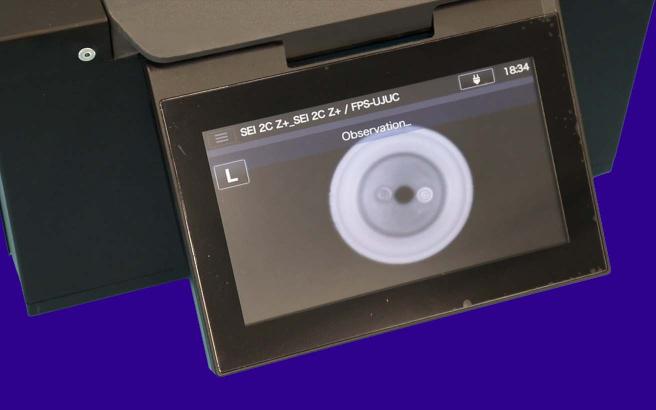
Fusion Splicing
Sumitomo Electric has commercialized fusion splicing technology for multi-core fiber, enabling precise core alignment and reliable low-loss splicing. This capability supports practical MCF deployment by extending established field-installation techniques to next-generation high-density optical networks.
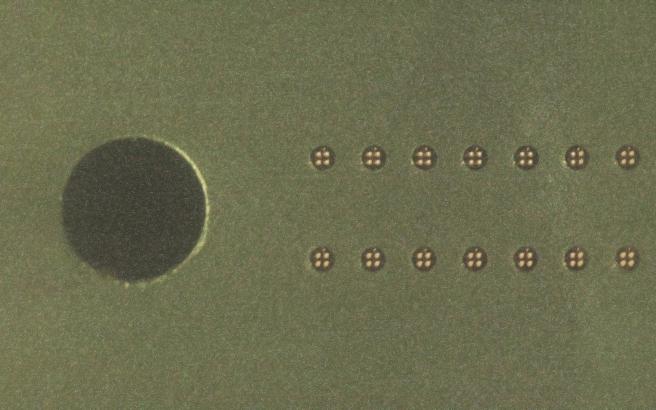
Connector Assembly
Sumitomo Electric can precisely align and integrate 4-core MCFs into 24-channel multi-fiber ferrules, enabling compact, high-density optical connectivity while maintaining the alignment accuracy required for low-loss and reliable multi-core connections.
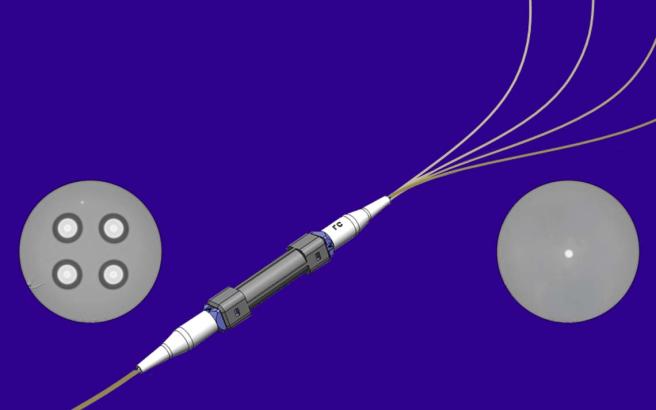
Fan-in/Fan-out Device
Sumitomo Electric has commercialized Fan-In/Fan-Out devices that connect multi-core fiber to conventional single-mode fiber, enabling seamless integration with existing networks while simplifying deployment, testing, interoperability, and migration to higher-density systems.
Explore and Download Our Resources
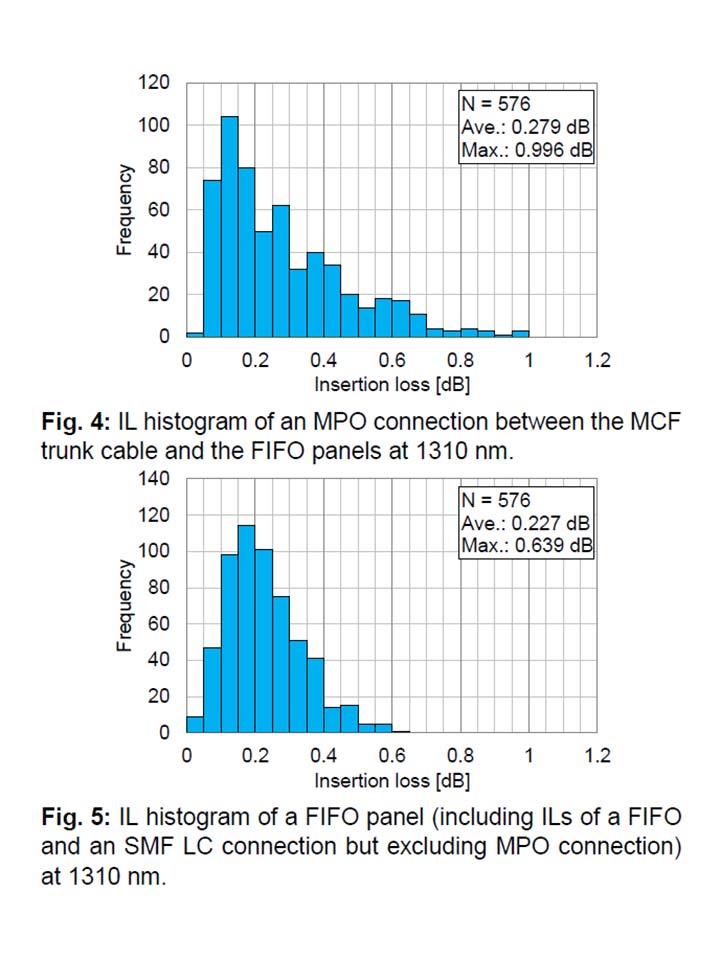
Short Reach Applications
Explore research on multi-core fiber technologies for short-reach optical interconnects in data centers, including high-density fiber and cable designs for space-efficient optical infrastructure supporting scale-out AI networks.
Data Center Interconnects and Long-Haul Applications
Explore research on inter-data-center, long-haul terrestrial, and submarine transmission. Topics include high-density fiber and cable designs, ultra-low-loss uncoupled fibers, randomly coupled fibers, and crosstalk characteristics, with relevance to emerging scale-across AI infrastructure.
Multi-core Fiber Connectivity
Explore research on multi-core fiber connectivity technologies required to integrate MCF into high-density optical interfaces. Topics include connector design, precise fiber alignment, pre-terminated cables, and fan-in/fan-out devices enabling low-loss connections between MCF systems and conventional optical networks.
Theory, Charcaterization, and Operation
Explore research on MCF evaluation and operation, covering theory, characterization, crosstalk modeling, measurement methods, bidirectional transmission, core identification, polarity management, and practical fiber management to support reliable deployment and maintenance of multi-core fiber networks.
Please Feel Free to Contact or Connect with Us
Follow Our LinkedIn
Please follow our LinkedIn showcase to have latest update by clicking a link below
Follow Us
Explore Relevant Content
Optical Fibers
Our high-performance optical fibers are engineered to meet the evolving demands of modern communication networks. Perfect for telecommunications, fiber optic networks, data centers, and industrial applications, Sumitomo Electric's optical fibers ensure seamless connectivity, optimal signal integrity, and efficient transmission, helping to drive the growth of global communication infrastructures.