Featured Stories
How C&I Facilities Use Battery Storage to Manage Cost, Risk, and Resilience
As commercial and industrial (C&I) organizations take a closer look at energy risk, many are asking a practical question: how does battery storage actually fit into day to day operations? The answer matters because storage delivers value only when it is tightly aligned with how a facility runs—not just with how a system is specified on paper.

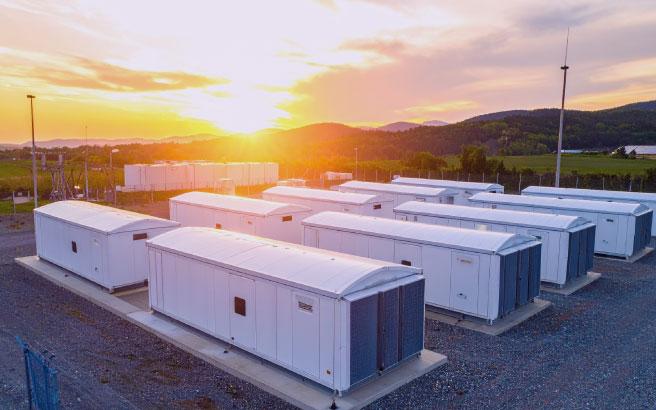
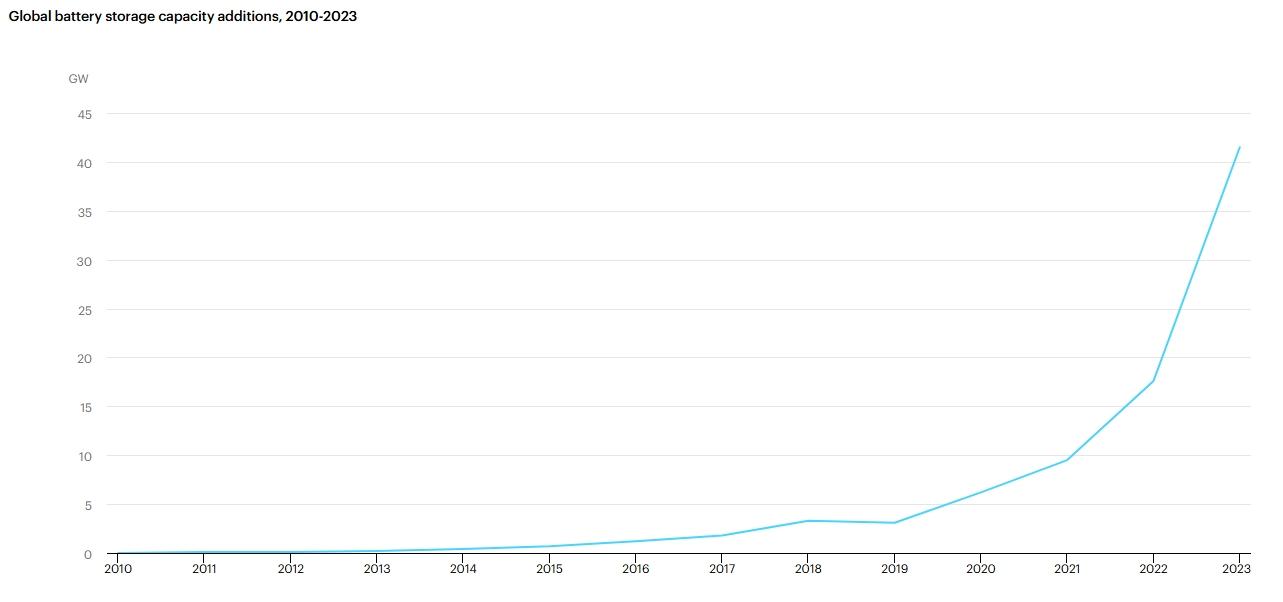
This article looks at how businesses are using storage to manage cost and risk, where short duration systems excel and where they face limitations, and how decision makers evaluate different storage technologies for real world commercial and industrial (C&I) use cases. Global battery storage deployments have accelerated rapidly in recent years, reflecting growing adoption across commercial and industrial applications. C&I adoption is a growing share of this total, especially in markets with high demand charges and time‑varying tariffs.

◇ Battery Storage as a Risk-Management Tool
From a business standpoint, storage is best understood as a risk management tool that gives facilities more control over their energy profile. By charging and discharging at the right times, a battery can reduce exposure to volatile prices, manage demand charges, and support operations when the grid is under stress.
Unlike residential systems, C&I storage is typically engineered for higher power levels, more frequent cycling, and deeper integration with energy management software and building or process controls. These capabilities allow facilities to actively shape when and how electricity is consumed, rather than reacting passively to external conditions.
◇ How Battery Storage Fits into Daily Operations
In many C&I environments, batteries are charged when electricity is inexpensive or abundant—for example, during off peak periods or when on site solar generation is high—and discharged when demand, prices, or operational risk increase.
Modern energy management platforms automate these decisions. They use price signals, tariff structures, load forecasts, and operational priorities to determine when storage should charge or discharge. For operations teams, this turns energy from a largely fixed overhead into a controllable variable that can be optimized alongside production schedules, staffing, and maintenance.
◇ When Short-Duration Storage Is Not Enough
For many years, commercial battery projects focused on short duration applications such as peak shaving and limited backup power, where lithium-ion systems have performed well. These use cases remain important and will continue to represent a large share of C&I deployments.
However, some facilities are now confronting challenges that extend beyond a few hours: longer operating schedules with sustained peaks, multi hour or multi day outages, or prolonged periods of high prices and grid stress. In these situations, short duration systems alone may not fully address the risk of lost production, missed service levels, or safety concerns.
The issue in these cases is not grid-level balancing, but maintaining business operations when energy constraints persist across longer time windows. As a result, some organizations are beginning to layer additional storage capacity or evaluate solutions designed to support longer operating periods with manageable degradation and operational complexity.
◇ How C&I Users Evaluate Storage Technologies
In C&I settings, technology selection is rarely driven by battery chemistry alone. Decision makers typically evaluate options based on operational fit, lifecycle expectations, safety, and maintainability.
- Lithium-ion batteries are widely deployed for applications such as demand charge management and short-duration backup, where high energy density, fast response, and declining upfront costs align well with limited discharge durations and moderate cycle requirements.
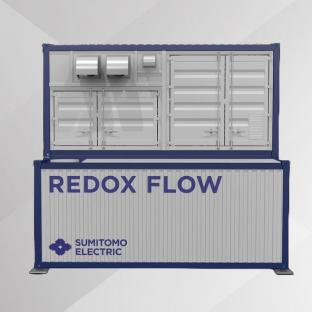
- Flow batteries are often evaluated for applications requiring long-duration operation, frequent or daily cycling, and enhanced safety in or near occupied facilities. Because energy capacity and power are decoupled and electrochemical degradation is primarily cycle-independent, these systems can maintain stable performance over extended lifetimes, making them well-suited for long-duration energy shifting, resilience applications, and operationally intensive use cases.
- Lead acid batteries continue to serve basic backup roles in cost-sensitive or legacy systems, but shorter lifetimes, lower cycle tolerance, and higher maintenance needs often limit their suitability for frequent cycling or optimization-driven C&I energy strategies.
In practice, the “right” solution depends less on technology labels and more on how well a system aligns with facility level requirements—such as critical load duration, cycle frequency, space constraints, and integration needs.
◇ Business Applications and Adoption Drivers
Across sectors such as retail, manufacturing, logistics, cold storage, and data intensive facilities, storage adoption is typically driven by specific operational risks rather than sustainability goals alone.
Common drivers include:
- Exposure to high demand charges during extended peak periods
- The need to maintain critical operations during outages or power quality events
- Increasing variability in electricity pricing and availability
- The desire to increase the usable value of on-site renewable generation
Viewed through this lens, storage is not a standalone technology project. It is part of a broader cost control and risk management strategy that ties together tariffs, load management, backup planning, and decarbonization priorities.
Reference List
- International Energy Agency. (2024, April 25). Batteries and Secure Energy Transitions. Retrieved from https://www.iea.org/reports/batteries-and-secure-energy-transitions
- International Energy Agency. (2024 April 22). Global Battery Storage Capacity Additions, 2010–2023. Retrieved from https://www.iea.org/data-and-statistics/charts/global-battery-storage-capacity-additions-2010-2023
- U.S. Department of Energy. (2023). Energy Storage Grand Challenge: Energy Storage Market Report. Retrieved from https://research-hub.nrel.gov/en/publications/energy-storage-grand-challenge-energy-storage-market-report-us-de/
- U.S. Department of Energy. (2024). Energy Storage Reports and Data. Retrieved from https://www.energy.gov/energy-storage-grand-challenge/energy-storage-reports-and-data
- National Renewable Energy Laboratory. (2025). Cost Projections for Utility-Scale Battery Storage: 2025 Update. Retrieved from https://docs.nrel.gov/docs/fy25osti/93281.pdf
- BloombergNEF. (2024, December 10). Lithium-Ion Battery Pack Prices See Largest Drop Since 2017. Retrieved from https://about.bnef.com/insights/commodities/lithium-ion-battery-pack-prices-see-largest-drop-since-2017-falling-to-115-per-kilowatt-hour-bloombergnef/
- BloombergNEF. (2025, October 21). Global Energy Storage Boom: Three Things to Know. Retrieved from https://about.bnef.com/insights/clean-energy/global-energy-storage-boom-three-things-to-know/
Follow us on LinkedIn!
If you enjoyed this Feature Story, be sure to follow Sumitomo Electric U.S.A on LinkedIn. We share updates there whenever new stories are published. (Note: Sumitomo Electric Group also has a global LinkedIn account for corporate updates.)