Featured Stories
Why Energy Is Becoming a Strategic Risk for C&I Businesses
As electricity prices rise and grid conditions grow more volatile, energy is no longer just an operating cost for commercial and industrial businesses—it is becoming a strategic risk. From price volatility and demand charges to outages and congestion, energy-related disruptions increasingly affect business continuity, profitability, and long-term planning.
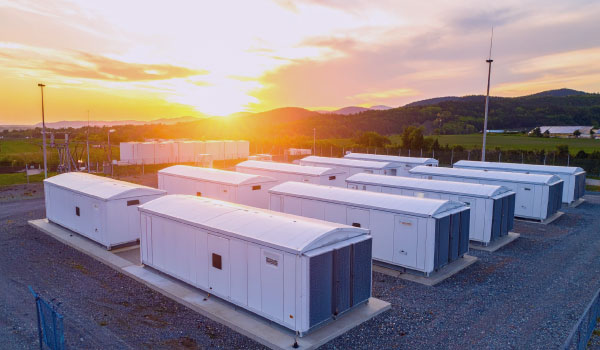
This trend is being reinforced by rising electricity prices and growing volatility in energy markets. According to the U.S. Energy Information Administration (EIA), average retail electricity prices for commercial and industrial customers have increased faster than overall inflation since 2022, with further upward pressure expected through 2026 due to fuel costs, grid investments, and regional supply constraints.

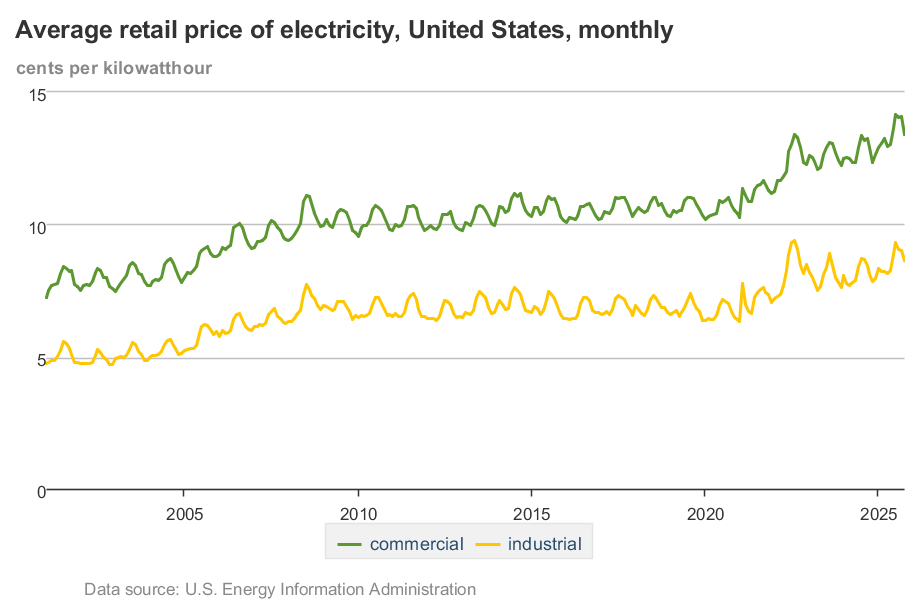
◇ Why is energy becoming a strategic risk for C&I businesses?
Energy is becoming a strategic risk for C&I businesses because rising electricity prices, greater price volatility, and increased exposure to outages now directly affect cost structure, uptime, and long-term planning.
For years, many commercial and industrial (C&I) facilities treated electricity as a relatively predictable line item in the operating budget. That assumption is increasingly hard to justify. In the United States and other advanced economies, average electricity prices have risen in recent years, while volatility has increased as grids integrate more variable generation and face new demand from electrification and data-intensive operations. At the same time, extreme weather events and local grid congestion are increasing the risk of outages and power quality issues in many regions. Rather than a steady increase in everyday outages, recent data suggest that large-scale, weather-driven events are accounting for a growing share of total power interruptions, amplifying operational risk for C&I facilities.
As a result, energy is no longer just about securing the lowest rate on a utility bill. For many organizations, it has become a strategic risk that can affect cost structure, uptime, and long term competitiveness. This shift is driving renewed interest in on-site energy solutions—such as battery storage—that give businesses more control over energy cost, risk, and resilience.
◇ How Energy Risk Is Evolving in C&I Operations
For much of the last few decades, facility and finance teams could reasonably assume that grid power would be available when needed and that electricity costs would move within a relatively narrow band. Today, that baseline is changing.
Several trends are converging:
- Electricity prices are becoming more volatile, influenced by fuel markets, capacity constraints, and changing generation mixes.
- Grid disruptions—from weather related events to local equipment failures—are occurring more frequently in many regions.
Timelines for infrastructure upgrades, such as capacity increases and interconnection improvements, are often uncertain and longer than businesses would prefer.
Under these conditions, the core question is shifting from “How do we minimize our electricity rate?” to “How do we ensure reliable, affordable power across a wider range of operating scenarios?” For C&I organizations, that is fundamentally a risk management challenge as much as a procurement question.
◇ Understanding Energy Risk in Commercial and Industrial Operations
Energy risk in C&I environments goes beyond the utility bill total. It shows up in three interrelated dimensions: cost exposure, operational continuity, and long-term planning uncertainty.
On the demand side, facilities are adding new loads such as electrified processes, automation, robotics, and data-intensive IT systems. Many are also integrating on site solar or other distributed resources, which change the shape and timing of net demand. On the supply side, utilities are introducing more granular tariffs, including time of use rates, demand charges, and demand response programs that reward—or penalize—how and when power is used.
For operations leaders, the primary concern is avoiding downtime and quality issues when the grid is stressed or constrained. For finance teams, it is avoiding unexpected bill spikes and maintaining budget predictability. Energy decisions now cut across both perspectives, which is why more businesses are reconsidering how they manage their exposure, not just their average price.
◇ Key Business Benefits of Battery Storage
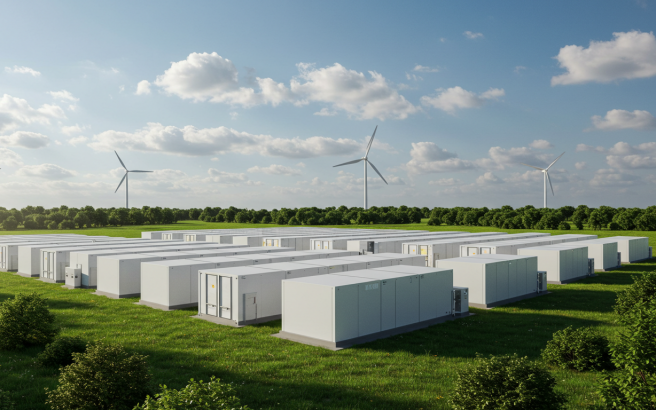
Within this context, battery storage is increasingly evaluated as a business tool rather than a purely technical asset. By storing electricity for later use, facilities gain more flexibility in how they interact with both the grid and their own on site generation.
From a cost perspective, storage can be used to reduce exposure to demand charges and high price periods by discharging during peaks and charging when energy is less expensive or when on site solar output is abundant. This can lower monthly bills and, perhaps more importantly, make energy costs more predictable for budgeting and planning. Declining battery prices have strengthened the business case in many C&I segments, shortening payback periods where tariffs and load profiles are favorable.
From a resilience perspective, batteries can provide on site backup power during outages or grid disturbances, supporting critical loads and reducing dependence on external supply. As weather related and operational disruptions become more frequent, many organizations now view resilience as a core operating requirement rather than a contingency feature.
◇ From Energy Cost to Energy Strategy
As energy systems evolve, electricity is moving from a background expense to a strategic factor that shapes cost structure, operational risk, and competitiveness. For C&I organizations, the question is no longer whether energy will remain a manageable cost, but how proactively they will manage it.
On site battery storage is one of the tools enabling this shift. Rather than replacing existing power arrangements, storage can complement them by providing flexibility, predictability, and greater control over when and how electricity is used.
A practical first step for many facilities is to map their current demand charges, outage exposure, and future electrification plans over the next 5–10 years. This simple exercise often makes clear whether energy risk is acceptable as is—or whether storage and other on-site solutions should be part of the conversation.
Reference List
- International Energy Agency. (2024, April 25). Batteries and Secure Energy Transitions. Retrieved from https://www.iea.org/reports/batteries-and-secure-energy-transitions
- International Energy Agency. (2017, November). Digitalisation and Energy. Retrieved from https://www.iea.org/reports/digitalisation-and-energy
- World Resources Institute. (2025, December 15). What's Really Driving Up US Electricity Prices? We Unpack the Numbers. Retrieved from https://www.wri.org/insights/whats-driving-us-electricity-prices
- U.S. Department of Energy, Federal Energy Management Program. (2025, March 31). Demand Response and Time-Variable Pricing Programs. Retrieved from https://www.energy.gov/femp/demand-response-and-time-variable-pricing-programs
- U.S. Energy Information Administration. (2025). Average retail price of electricity. Retrieved from https://www.eia.gov/electricity/data/browser/
- Integrity Energy. (2024, November 19). Understanding Electricity Demand Charges for Your Business. Retrieved from https://www.integrityenergy.com/blog/understanding-electricity-demand-charges-for-your-business/
- National Renewable Energy Laboratory. (2017, September 18). Maximum Demand Charge Rates for Commercial and Industrial Customers. Retrieved from https://data.nrel.gov/submissions/74
- Clean Energy Group; National Renewable Energy Laboratory. (2017, August 24). Identifying Potential Markets for Behind-the-Meter Battery Energy Storage. Retrieved from https://www.cleanegroup.org/publication/nrel-demand-charges-storage-market/
- Utility Dive. (2025, October 21). US energy storage market looks resilient amid global growth: BNEF. Retrieved from https://www.utilitydive.com/news/us-energy-storage-market-looks-resilient-amid-global-growth-bnef/803368/
Follow us on LinkedIn!
If you enjoyed this Feature Story, be sure to follow Sumitomo Electric U.S.A on LinkedIn. We share updates there whenever new stories are published. (Note: Sumitomo Electric Group also has a global LinkedIn account for corporate updates.)