Featured Stories
Data center power shortage solutions: behind-the-meter long-duration
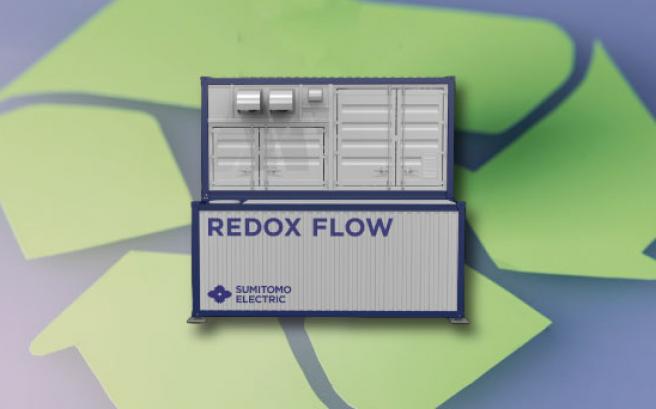
Hyperscale and AI campuses face power capacity constraints, interconnection delays, and price spikes. As one practical and safe solution, behind-the-meter long-duration energy storage (LDES) using vanadium redox flow batteries (VRFB) adds 8–12+ hour on-site discharge, improving price capture and resiliency with no thermal-runaway risk. Deployed as temporary power, VRFBs can support phased commissioning before the point of interconnection - subject to local permitting - keeping schedules on track while grid upgrades catch up.
◇ Tightening demand and a shift toward “reliability mode”
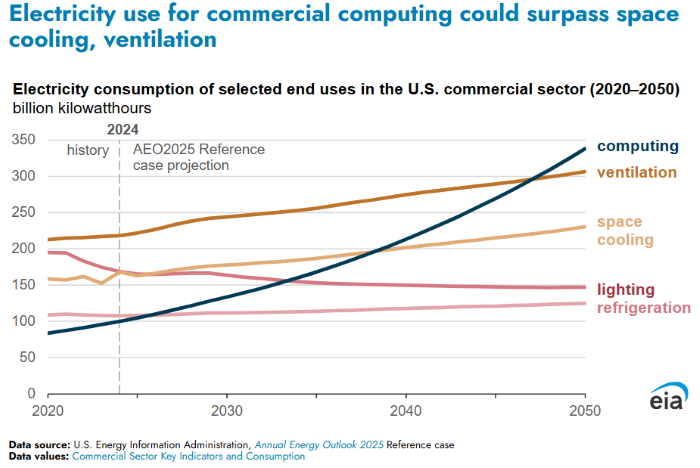
According to the U.S. Energy Information Administration (EIA), “computing” already accounts for about 8% of commercial-sector electricity use (2024) and is the fastest-growing commercial end use, projected to reach ~20% by 2050.
On the grid side, according to PJM’s 2025 Long-Term Load Forecast Report, long-term load outlooks point to higher peaks and a wide dispersion in zone growth rates about 0.1–6.0% 10-year CAGR (median of 1.6%), which complicates planning and interconnection, raising schedule and cost risk.
Regulatory posture is also evolving. For example, Texas Senate Bill 6 (SB6) (2025) formalizes planning/interconnection/operations frameworks for large electrical loads and co-located generation while characterizing Electric Reliability Council of Texas (ERCOT) curtailment/disconnection authority as limited and conditional. In practice, operators should track state-level rules and utility guidance, and design on-campus, long-duration flexibility using behind-the-meter (BTM) storage to hedge outages, price shocks, and interconnection delays across development and ramp-up.
◇ BTM long-duration storage that rides through outages and shapes imports
Placing storage behind the meter creates a practical resilience layer on campus:
1. Ride through grid events to keep critical loads online.
2. Shape imported power to mitigate peaks and price volatility.
3. Smooth on-site PV/wind and respond more flexibly to utility requests.
NREL defines BTM storage as assets connected on the customer side of the meter, and it increasingly sits at the center of reliability and cost control for buildings and campuses.
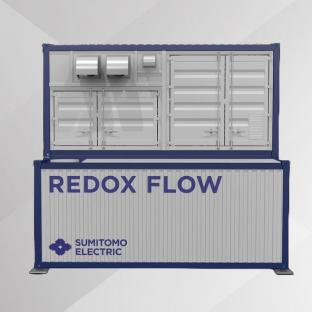
Why VRFB for BTM? A VRFB stores energy in electrolyte tanks and provides power via cell stacks, so you can extend energy hours by adding tanks as rack density and AI clusters grow—pushing required discharge from 4 hours toward 8–12+ hours. With a non-flammable, water-based electrolyte and no thermal-runaway mechanism, VRFBs align well with urban campus Environment, Health, and Safety (EHS) requirements and permitting standards. In effect, one on-site system reduces price, reliability, and schedule risk at the same time.
◇ Temporary power: de-risk timelines before full interconnection
When full interconnection or upgrades take time, pairing VRFB + on-site generation (PV and/or clean thermal) enables phased commissioning—starting with test loads or partial halls—while POI work finishes. This approach acts as schedule insurance, limiting value erosion and keeping construction moving, provided local tariff and permitting requirements are met.
◇ Safety & compliance: non-flammable VRFB, UL 1973 / UL 9540A ready
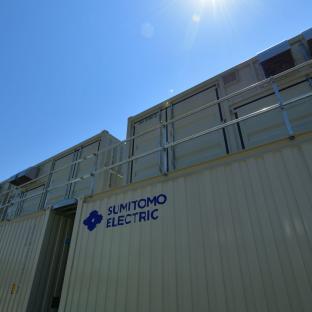
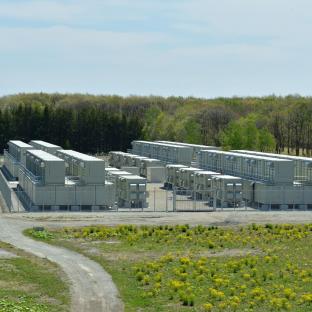
In San Diego, Sumitomo Electric’s SDG&E project achieved the first U.S. UL 1973 certification for a flow-battery cell stack (2017), entered CAISO market operations (2018), and later demonstrated a zero-emissions microgrid with black-start and seamless islanding. These field results translate directly to hyperscale campuses: non-flammable chemistry that eases siting and insurance reviews, daily full-cycle durability for high-duty operation, and scalable energy hours via tank expansion to meet 8–12+ hour windows (evening peaks, outage coverage). Continuous U.S. operation, CAISO participation, and microgrid experience together help lower operational risk after deployment.
References:
- U.S. Energy Information Administration. (2025, June 25). Electricity use for commercial computing could surpass space cooling and ventilation. Today in Energy. Retrieved from https://www.eia.gov/todayinenergy/detail.php?id=65564
- PJM Interconnection. (2025, January 24). 2025 Long-Term Load Forecast Report. Retrieved from https://www.pjm.com/-/media/DotCom/library/reports-notices/load-forecast/2025-load-report.pdf
- Baker Botts LLP. (2025, July 18). Texas Senate Bill 6: Understanding the Impacts to Large Loads and Co-located Generation. Retrieved from https://www.bakerbotts.com/thought-leadership/publications/2025/july/texas-senate-bill-6-understanding-the-impacts-to-large-loads-and-co-located-generation
- National Renewable Energy Laboratory. (2021, August). Behind-the-Meter Battery Energy Storage: Frequently Asked Questions. Retrieved from https://docs.nrel.gov/docs/fy21osti/79393.pdf
- National Renewable Energy Laboratory. (2025, April 3). Behind-the-Meter Storage Analysis (BTMS). Retrieved from https://www.nrel.gov/transportation/behind-the-meter-storage-analysis
Follow us on LinkedIn!
If you enjoyed this Feature Story, be sure to follow Sumitomo Electric U.S.A on LinkedIn. We share updates there whenever new stories are published. (Note: Sumitomo Electric Group also has a global LinkedIn account for corporate updates.)