
Disclosure Based on TCFD/TNFD Recommendations
Outline
Introduction
General Requirements
(1)The application of materiality (2)The scope of disclosures (3)The location of nature-related issues (4)Integration with other sustainability-related disclosures (5)The time horizons considered (6)The engagement of affected stakeholders
Four Pillars
(1)Governance (2)Strategy (3)Risk and Impact Management (4)Metrics and Targets
Future outlook
Introduction
Based on the corporate philosophy of the “Sumitomo Spirit *1” and the “Sumitomo Electric Group Corporate Principles *2,” and guided by the enduring management policy of “contributing to society through fair business activities,” the Sumitomo Electric Group is committed to enhancing corporate value over the medium to long term. The Group steadily distribute and return the results as a going concern to its five main stakeholders — employees, customers, suppliers, communities, and shareholders/investors — in line with the Multistakeholder Capitalism concept of “Goho Yoshi” (Five-Way Win), thereby pursuing further sustainable development.
Based on this fundamental philosophy, in 1997, the Group established the “Environmental Policy*3” as one of its key management challenges to address the global environment, including climate change. In accordance with the policy, the Group has continuously worked on environmental protection activities and reducing the environmental impact arising from its business operations from a global perspective. In May 2021, the Group expressed its endorsement of the recommendations of the Task Force on Climate-related Financial Disclosures (TCFD), formed by the Financial Stability Board (FSB), to disclose information related to risks and opportunities brought about by climate change. In May 2022, in line with TCFD recommendations, disclosure was made on four items related to climate change, namely: Governance, Strategy, Risk management and Metrics and Targets; and the Group also shared its scenario analysis.
Furthermore, with regard to nature-related issues, the Group recognize that assessing risks and opportunities related to its dependencies on and impacts on nature, and appropriately addressing the issues identified as a result, are essential for enhancing corporate value and achieving mutual prosperity with its multi-stakeholders. Based on this understanding, the Group has been conducting analyses in accordance with the LEAP approach (the four stages—Locate, Evaluate, Assess, and Prepare—including scoping as part of the preliminary preparation) recommended by the Task Force on Nature-related Financial Disclosures (TNFD) since April 2025. In October 2025, the Group assessed its dependencies on and impacts on the natural environment across its five business segments, identified the segment requiring the highest priority for action, and disclosed this information. Based on those results [Four Pillars. (2). ②.a. Determining the scope of analysis (Scoping)], the Group focused on copper—a raw material with significant dependencies on and impacts on nature—and is disclosing the results of its evaluation and analysis of the power cable business, a core business within the “Environment&Energy” segment, which procures large volumes of copper as a raw material.
Going forward, the Group will continue to expand the scope of our assessments and strive to incorporate the nature-related risks and opportunities identified through these evaluations and analyses into its management plans and business strategies.
*1, *2 https://sumitomoelectric.com/company/vision
*3 https://sumitomoelectric.com/sustainability/environment/management
General Requirements
(1)The application of materiality
The Sumitomo Electric Group comprehensively identifies social and environmental issues for a diverse range of stakeholders and assesses the materiality of these issues based on two axes: “importance to SEG (including in terms of financial impact)” and “importance to stakeholders (including in terms of social and environmental impact).” The Group conducted a materiality assessment for climate and nature-related issues using the same axes.
(2)The scope of disclosures
Regarding strategies for nature-related issues, the Group focused its analysis and disclosure on the upstream, direct operations, and downstream of the power cable business—the core business of the “Environment & Energy” segment—within the Group’s five business segments: “Environment & Energy,” “Info-Communications,” “Automotive,” “Electronics,” and “Industrial Materials.” For climate-related strategies, the analysis and disclosure cover the entire Group.
(3)The location of nature-related issues
The analysis for fiscal year 2025 covers 18 direct operations sites including subsidiaries(such as manufacturing sites, development sites, and office locations), 25 upstream value chain sites (such as copper mines and smelters), and 14 downstream value chain sites (such as transmission cable installation sites) in the power cable business.
(4)Integration with other sustainability-related disclosures
The Group recognize that climate-related and nature-related issues are interlinked, and it is advancing integrated initiatives under its “Environmental Policy” in the conduct of its business. Furthermore, climate-related and nature-related risks are managed holistically as part of the Group’s risk management framework, and the Group plan to incorporate the nature-related risks identified in this analysis into the its risk management. Consequently, in our sustainability-related disclosures, the Group organize and disclose climate related and nature-related information in an interconnected manner. However, the Group is currently considering the disclosure of an integrated climate-related and nature-related strategy that takes trade-offs into account, as well as the integration of these disclosures with other sustainability-related disclosures.
(5)The time horizons considered
The short term:Through 2028, in alignment with the “Mid-term Management Plan 2028,” a three-year management plan beginning in 2026. The medium term: Through 2030, in alignment with the “Sumitomo Electric Group 2030 VISION,” our long-term vision starting in 2022. The long term: Through 2050, the target year for achieving carbon neutrality (Scopes 1 and 2).
(6)The engagement of affected stakeholders
The Group recognizes that its operations are supported by a range of stakeholders including “customers,” “employees,” “suppliers,” “regional communities,” and “shareholders/investors,” and that it is mandatory to strive to build appropriate cooperative relationships with our stakeholders based on the “Goho Yoshi” (Five-way Win) philosophy, taking their interests into consideration in order to achieve sustainable growth and enhance the corporate value of the Group over the medium to long term.
Regarding climate-related and nature-related issues, the Group engage in dialogue with these five stakeholder groups through the following means and incorporate the feedback it receives into our business activities, such as business promotion and improvements to local communities and the environment.
Customers … Daily sales activities, Exhibitions, Meetings with important business partners, Product catalogs, Advertisements, Websites
Employees … Training and education by SEI University, Seminars, Corporate newsletters and Intranet, Town hall meetings (discussions between management and employees)
Suppliers … Daily procurement activities (supplier evaluation, etc.), Partners Meetings, Surveys and training sessions in line with the CSR-based procurement self-assessment questionnaire (SAQ), Compliance consulting and reporting desk
Regional communities … Contribution to society through donations and volunteer activities, Collaboration with NPOs, Contribution to regional communities through business and others, Exchanges with regional communities(Eco-Activities 2030), PR magazines, Support for education and training, Dialogue via economic and industry organizations
Shareholders/Investors … General Meeting of Shareholders, IR briefings, One-on-one dialogues, IR website, Various reports (Integrated Report,CSR book, Consolidated Financial Statements, Corporate Governance Report, etc.)
Four pillars
(1)Governance
①Governance Structure for Climate and Nature-Related Issues
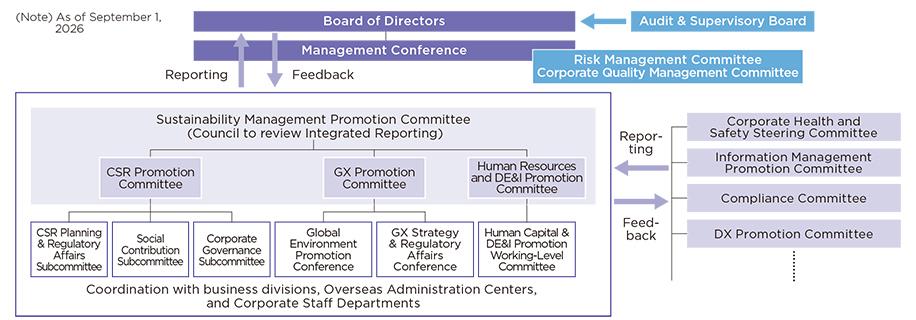
In February 2021, the Group established the “Sustainability Management Promotion Committee,” chaired by the President and composed of members drawn from a wide range of relevant departments. The “Sustainability Management Promotion Committee” has formulated fundamental policies*4 regarding sustainability initiatives and is discussing specific targets and measures for addressing global environmental issues, including climate and nature-related challenges.
The activities of the Sustainability Management Promotion Committee, which meets semi-annually, are reported to the Board of Directors after each meeting, and items on the Committee’s agenda that require submission to the Board of Directors are discussed and reported on separately, providing a structure for the Board of Directors to oversee sustainability management. Officer compensation is determined based on the Compensation Advisory Committee’s deliberations and a comprehensive consideration of each officer’s role and responsibilities, contribution to company performance, and non-financial indicators such as ESG.
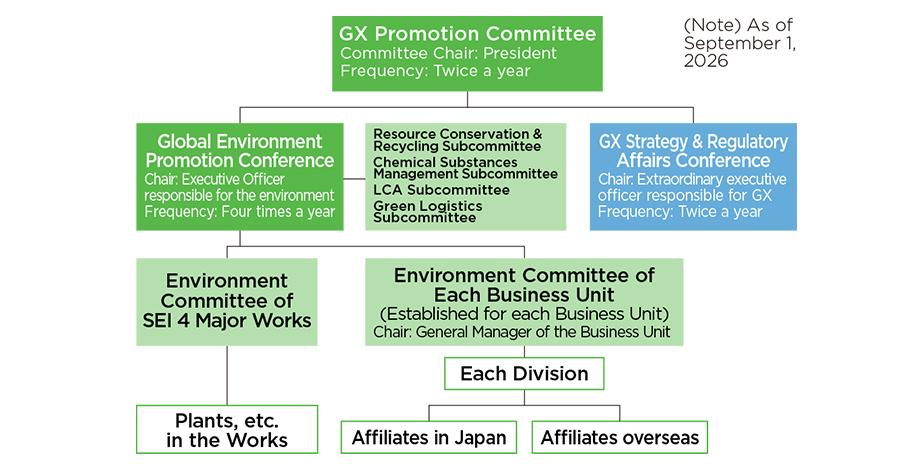
In October 2024, the Group established the “GX Promotion Committee,” chaired by the President, under the “Sustainability Management Promotion Committee.” To realize the “Green Society” outlined in its Long-term Vision “2030 VISION,” this committee is driving efforts to further create and expand environmental value, respond quickly and appropriately to developments in the regulatory environment in global markets, and further strengthen its planning capabilities.
Furthermore, to examine specific measures from a specialized perspective, the Group has established the “Global Environment Promotion Conference” under the “GX Promotion Committee,” chaired by Executive Officer responsible for the environment, to advance initiatives related to reducing greenhouse gas emissions, promoting the circular economy, preventing environmental pollution, and preserving biodiversity. Additionally, the “GX Strategy & Regulatory Affairs Conference,” chaired by Extraordinary executive officer responsible for GX, is working to strengthen its response to various GX regulations, expand green-related businesses, and enhance communication regarding its GX initiatives.

②Human Rights Policy and Engagement
a. Human Rights Policy
Based on the United Nations’ “International Bill of Human Rights” and “Guiding Principles on Business and Human Rights,” as well as the International Labor Organization (ILO)’s “Declaration on Fundamental Principles and Rights at Work,” which stipulates freedom of association and the right to collective bargaining, the Sumitomo Electric Group has established the “Sumitomo Electric Group Policy on Human Rights*5” following deliberations by the Management Conference and the Board of Directors. Under this policy, the Group recognizes that all of its business activities must be based on respect for human rights, and it promotes Group-wide efforts to respect human rights.
*5 https://sumitomoelectric.com/sites/default/files/2020-12/download_documents/human_rights.pdf
b. Engagement with Suppliers
The Group established the “CSR Procurement Guidelines*6” and the “Supplier Code of Conduct*7.” To ensure that the Group’s suppliers reliably implement these guidelines, it includes a clause requiring compliance in its basic transaction agreement, request the submission of a consent form, and conduct surveys (CSR-based procurement assessments) using a CSR Procurement Self-Assessment Questionnaire. The Group also holds training sessions for its suppliers on the fundamental principles of CSR procurement (including responsible minerals sourcing initiative, human rights, labor safety, environmental considerations) and CO2 emissions reduction, thereby promoting sustainable procurement activities in partnership with the suppliers.
*6 https://sumitomoelectric.com/sites/default/files/2023-04/download_documents/csr_guide.pdf
c. Responsible Mineral Sourcing Initiative
The Group recognizes risks such as human rights abuses and labor issues in Conflict Areas and High-Risk Areas (CAHRAs), as described in the Organization for Economic Cooperation and Development (OECD) Due Diligence Guidance, as among the most serious social issues in the supply chain. In order to uphold its social responsibility in sourcing activities, the Group is committed to “responsible minerals sourcing” that does not use raw materials linked to conflict minerals associated with illegal or dishonest acts. To this end, as part of its efforts related to the “CSR Procurement Guidelines” and “Supplier Code of Conduct”, the Group will, where appropriate, investigate the supply chain for minerals associated with illegal or dishonest activities, and if there are concerns that the minerals may cause human rights issues and other types of social problems, or serve as a source of funding for armed groups, the Group will take steps to avoid their use.
(2)Strategy
Sumitomo Electric Group established its “Environmental Policy” in July 1997. In its basic philosophy, the policy states: “The Sumitomo Electric Group thinks it is primarily important to establish a society that is sustainable and has less environmental impact. While making continuous and steady efforts to promote our global environmental preservation activities, the Sumitomo Electric Group contributes to world people and society by providing products and services in “Environment & Energy,” “Info-Communications,” "Electronics,” “Automotive,” and “Industrial Materials & Others” related business. Furthermore, in its Action Guidelines, the Group state that we will “promote environmental-oriented management in which the Sumitomo Electric Group considers environmental preservation activity is one of the most important issues for corporative management” thereby clarifying that addressing global environmental issues is of paramount importance in the Group’s management strategy.
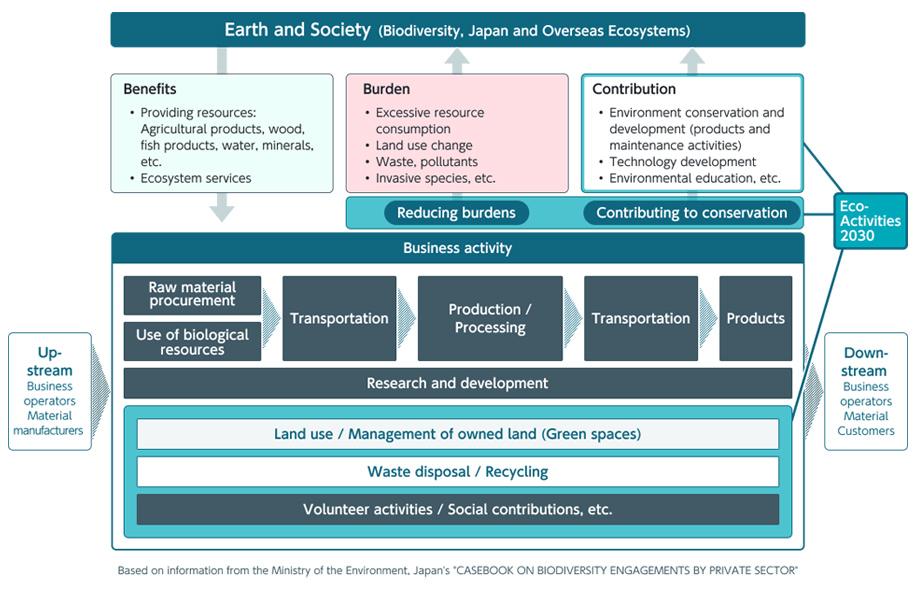
The Group thinks that it benefits from the blessings of nature (ecosystem services) through the procurement of raw materials and the manufacturing of products. The Group believes that in order to continue its operations, it needs to contribute to ecosystem conservation and local environmental protection. With a basic understanding that the environmental burdens associated with our business activities impact biodiversity, the Group aims to understand the overall environmental burden and take action to reduce it, promoting community-based environmental initiatives at each of its facilities.
Regarding its relationship with nature, the Group began analyzing nature-related issues in accordance with the TNFD recommendations in fiscal year 2025, and it continuously assess its dependence on natural capital in its business activities as well as the environmental impacts generated by those activities. Furthermore, it is identifying the financial implications for the Group as risks and opportunities, and translating these into specific targets and initiatives.
To promote environmental management, the Group has under the “Sumitomo Electric Group 2030 VISION” and the “Mid-term Management Plan 2028,” it has set quantitative targets such as achieving carbon neutrality by 2050 (Scopes 1 and 2). It is systematically advancing initiatives to reduce environmental impacts in its business activities—including cutting greenhouse gas emissions, promoting the circular economy, preventing environmental pollution, and preserving biodiversity —as well as expanding the provision of environmentally conscious products.
Furthermore, to protect our rich natural environment and achieve mutual prosperity with local communities, the Group has been implementing “Eco-Activities 2030” at each of its business sites—a program designed to give back to nature through local, eco-friendly initiatives such as ecosystem conservation, greening, and community clean-up efforts. Moving forward, the entire Group will continue to work toward the goal of implementing more than 300 initiatives annually—including biodiversity preservation and local environmental protection—to restore nature in more than 20 countries and regions by 2030.
①Climate Change-Related Risks and Opportunities
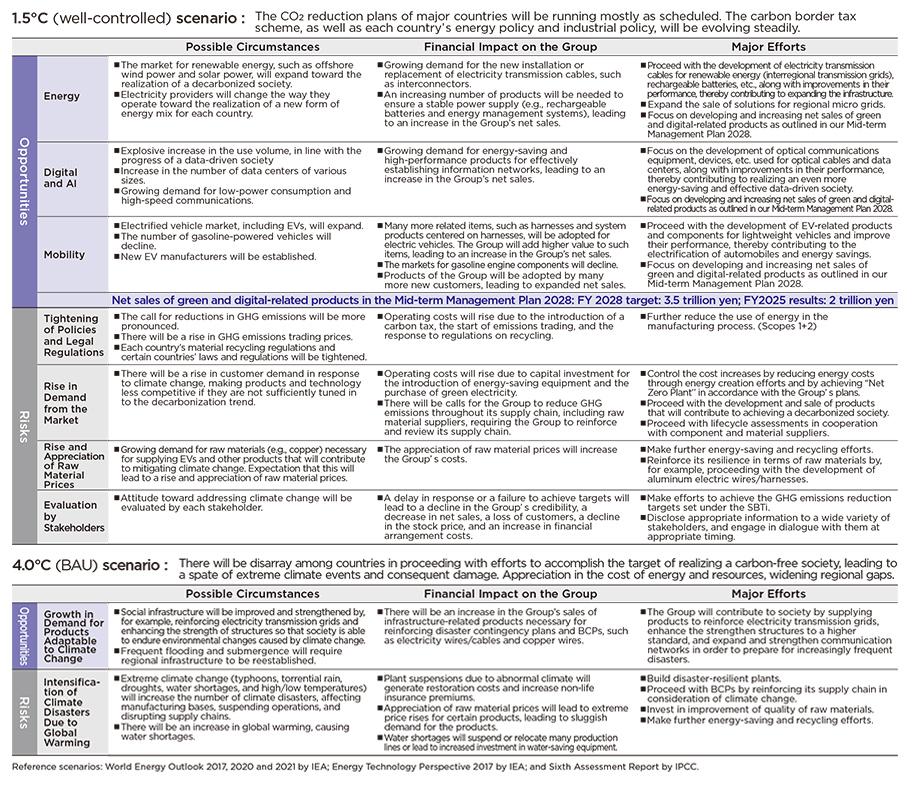
Based on the TCFD recommendations, the Group considers two scenarios: one in which the global average temperature rise is limited to 1.5°C above pre-industrial levels, and another in which it rises by 4°C. Based on these scenarios, the Group analyzes the impact of climate change-related risks and opportunities on its business and is deliberating on future initiatives.The risks and opportunities identified as material to the Group through the scenario analysis and the planned major efforts are shown in the table below.
Furthermore, from the perspective of assessing resilience, it has analyzed and disclosed transition risks and related opportunities under the 1.5°C scenario, and physical risks and related opportunities under the 4°C scenario.
②Identification of Nature-Related Issues
a. Determining the Scope of Analysis (Scoping)
The Group operates globally in five business segments: Environment & Energy, Info-Communications, Automotive, Electronics, and Industrial Materials. For these business segments, the Group conducted “scoping (determining the scope of analysis)” in accordance with the LEAP approach recommended by TNFD.
During scoping, the Group first organized the value chains from upstream to downstream for the main products in each business segment and then analyzed dependencies and impacts on nature in each process in the value chain by using ENCORE, an analysis tool recommended by TNFD. The results are shown in the heatmap below.
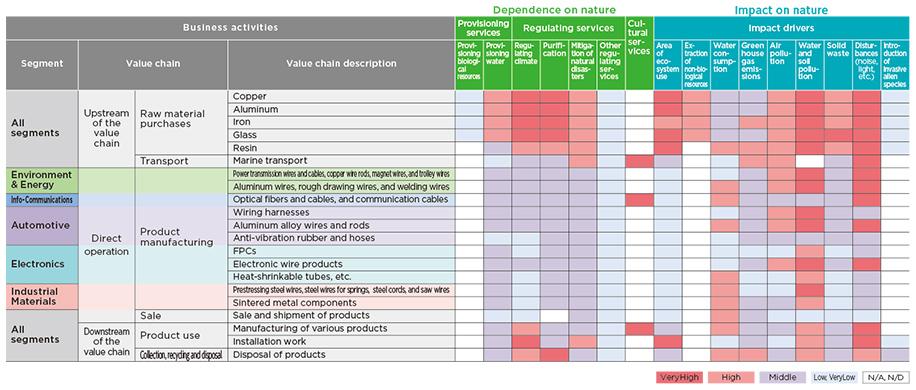
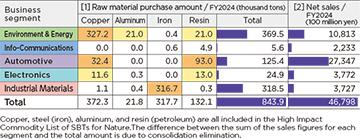
The heat map revealed that the Group’s business activities have a significant dependence on and impact on nature, particularly in the procurement of raw materials at the upstream end of the value chain. In addition, as shown in the table on the right, copper accounts for the largest share of the Group’s raw material purchases. The Group has therefore identified the Environment & Energy segment, which purchases a large amount of copper, as an important business domain, and it has selected the “power cable business”— the core business of the said segment—as the subject of analysis and disclosure.
b. Identifying Sensitive Locations (Locate)
Using the TNFD’s definition of “Sensitive Locations,” the Group analyzed the natural conditions at the sites (locations) where value chain activities for the “Power Cable Business” within the “Environment & Energy” segment are conducted.
The locations of activities subject to analysis were 18 locations in direct operations (manufacturing, development and office bases, etc.), including subsidiaries in the power cable business, 25 locations in the upstream value chain (copper mines, smelters, etc.), and 14 locations in the downstream value chain (power transmission cable installation sites). Regarding upstream copper mines, the Group widely evaluated mines that may be producing raw materials for its products, based on publicly available information from suppliers.
The “WWF Biodiversity Risk Filter (WWF BRF)” and “Landmark” were used to evaluate whether each site meets the criteria for sensitive locations* as defined by TNFD**.
As a result, all of the 25 copper mines and smelters (in South America, etc.) in the upstream value chain and the 14 transmission cable installation sites (in Europe, etc.) in the downstream value chain were identified as sensitive locations, while none of the direct operation sites met the criteria for sensitive locations.
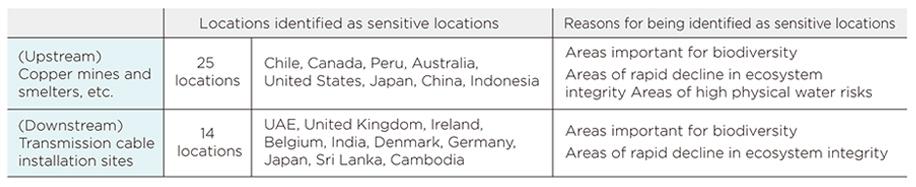
* Sensitive locations: Sensitive locations are the following five: “Areas important for biodiversity,” “Areas of high ecosystem integrity,” “Areas of rapid decline in ecosystem integrity,” “Areas of high physical water risks,” and “Areas of importance for ecosystem service provision, including benefits to Indigenous Peoples, Local Communities and stakeholders.”
** In accordance with the TNFD Guidance, the Group identifies its business locations that meet at least one of the five TNFD “sensitive locations” and that have been rated “Very High Risk” by WWF BRF, or “Proximate to areas managed by IPLCs” by Landmark as “sensitive locations. ”Furthermore, since changes in natural conditions may result from the synergistic effects of multiple factors, the Group additionally designates locations that meet two or more of the five TNFD “sensitive locations” and that have been rated “High Risk” by WWF BRF locations as “sensitive locations.”
c. Important Dependencies and Impacts (Evaluate)
Based on the results of the initial analysis of dependencies and impacts during the scoping phase, the Group analyzed the dependencies on and impacts on nature (ecosystem services) that it considers significant. The dependencies and impacts considered particularly important to the Group are as shown in the table below.
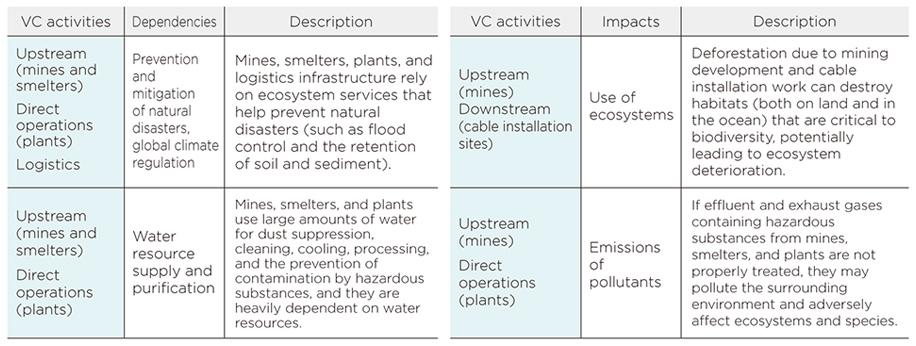
③Important nature-related risks and opportunities (Assess)
Based on the identified dependencies and impacts on nature, the Group created two scenarios for anticipated nature-related risks and opportunities in accordance with the TNFD’s Guidance, and it assessed the future risks and opportunities indicated by each scenario.
・Scenario I:
Society’s interest in living in harmony with nature and addressing climate change is high, and countries are aligned on nature-positive initiatives, decarbonization, and resource circulation, and global temperature rise is limited to 1.5°C above pre-industrial levels by 2100, resulting in minimal degradation of nature. This scenario is closely linked to transition risks.
・Scenario II:
A future in which public interest in living in harmony with nature and climate change is low, countries fail to align their efforts on nature-positive initiatives, decarbonization, and resource recycling, and global temperature rise proceeds at a rate of 4°C above pre-industrial levels by 2100, resulting in significant degradation of nature. This scenario is closely related to physical risks.
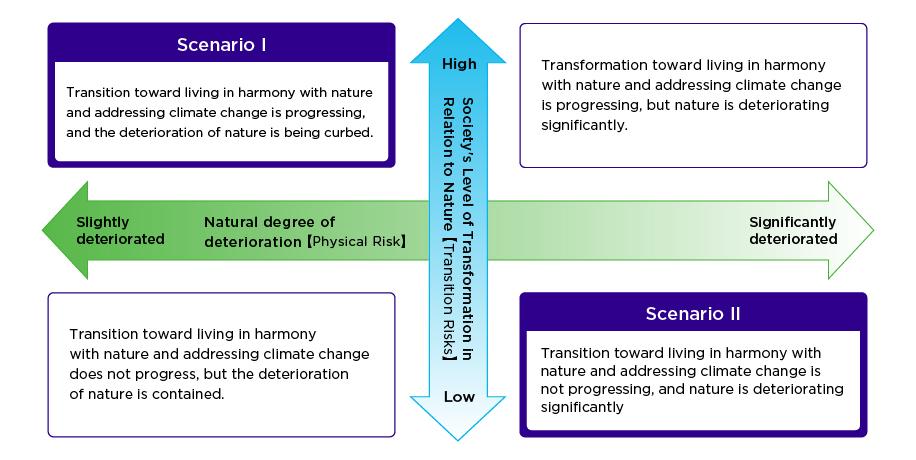
These scenarios are based on the Four-Quadrant scenarios that reflect the uncertainties associated with transition and physical risks as outlined by the TNFD, and have been adjusted to align with the scenarios used in the TCFD scenario analysis.
The risks and opportunities considered material to the Group, possible circumstances, financial impacts, and major efforts analyzed using these two scenarios are shown in the table below.
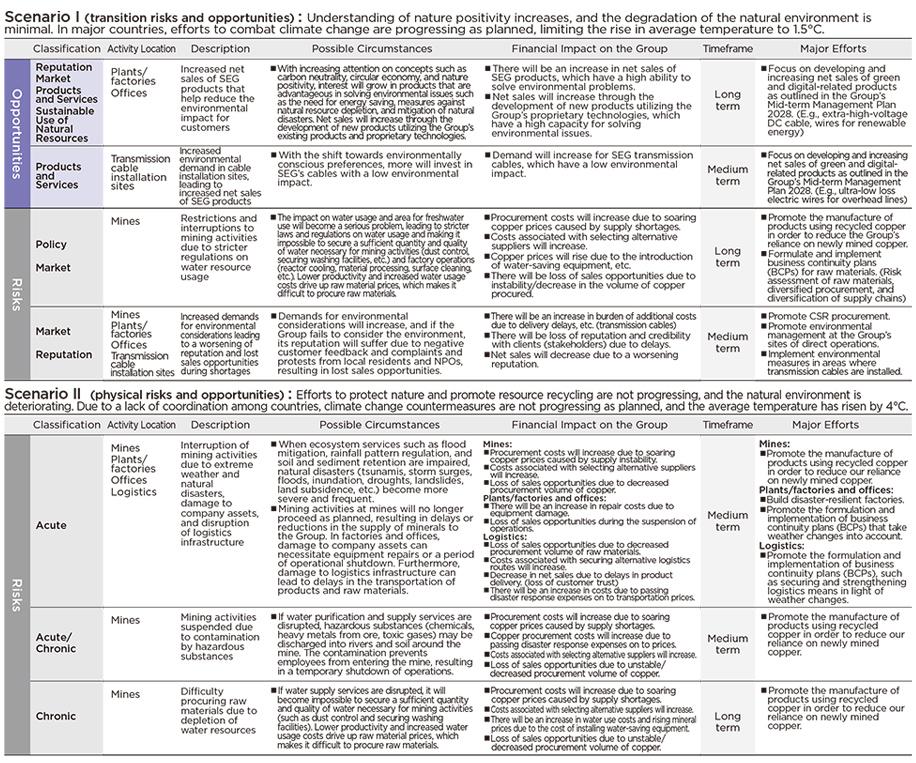
Regarding the assessment of the significance of risks and opportunities, the Group disclose those judged to be “high” in significance from the perspectives of likelihood of occurrence and the degree of financial impact on the Group should they occur.
④Measures to Address Climate and Nature-Related Issues (Prepare)
Among the measures being implemented by the Group, examples of measures related to the power cable business are shown below.
a. Contributing to the U.K.'s “Net-Zero Target”
In April 2023, as part of efforts to support the development of a clean energy supply chain in the UK, the Group announced the establishment of a state-of-the-art subsea power cable factory at the Port of Nigg in the Scottish Highlands, and construction began in May 2024. This factory will play a role in strengthening the UK’s power transmission grid and in manufacturing and supplying cables to connect offshore wind power generation to the UK mainland’s transmission grid. The power cables manufactured at this plant will serve as critical transmission infrastructure for supplying renewable energy to the UK mainland and surrounding regions, thereby contributing to the achievement of the UK’s “net-zero” goal.
b. Promoting the Circular Economy
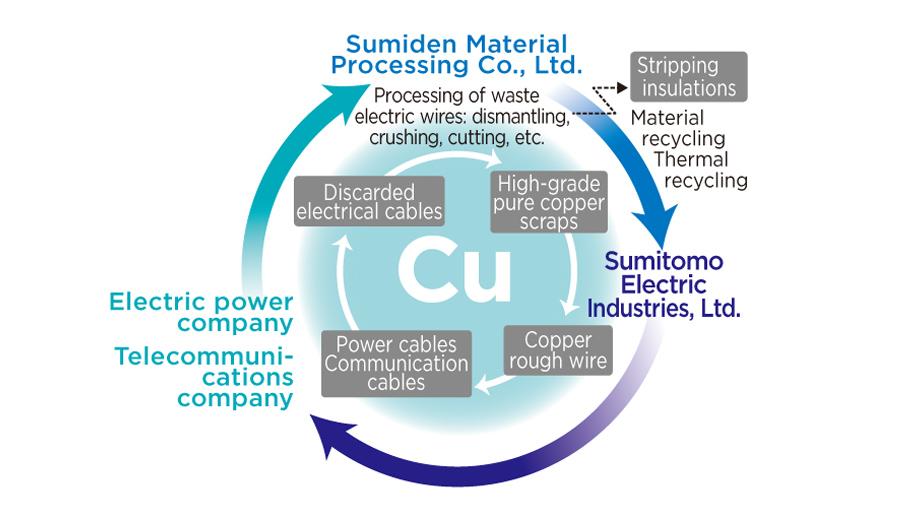
SEG is working to reduce defects in production, reduce the amount of waste generated, reuse waste within the Group and turn it into valuable resources, recycle raw materials, and reduce water consumption and promote water resource recycling. As a prime example of a raw material recycling initiative, the Group dismantles used electric power and communication cables at its affiliate Sumiden Material Processing Co., Ltd. and recycles the recovered copper in standard “continuous melting furnaces. ”In addition, the Group is working to increase the recycling rate by utilizing a copper smelting furnace known as a “Tilting Reverberatory Furnace”—the only one of its kind among domestic wire manufacturers— .The Group will continue to work toward creating copper raw materials that do not require new mining—that is, materials with minimal environmental impact.
c. Prevention of Environmental Pollution
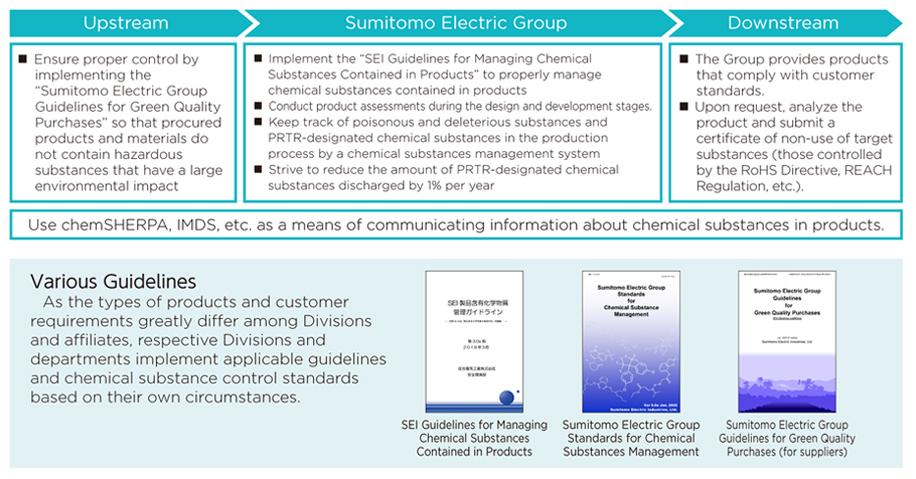
The Group is committed to managing chemical substances contained in its products, communicating information on chemical substances throughout the supply chain, managing chemical substances used in manufacturing at its factories, and reducing the amount of hazardous chemical substances released into the environment, with the aim of complying with laws and regulations, protecting the health and safety of its employees, contributing to environmental conservation, and earning the trust of its customers and consumers. As part of its efforts to reduce substances that have an impact on the environment in its business operations, the Group is promoting the reduction of emissions of substances covered by the PRTR system, striving to achieve a 1% reduction per year.
d. Biodiversity Preservation Activities
For the Nemo Link project—a high-voltage direct-current subsea power transmission cable connecting the United Kingdom and Belgium—experts conducted an ecological survey of the wetlands where the cable was to be laid prior to the start of power transmission in 2019, confirming that numerous rare wild birds inhabit and breed there. Consequently, the Group minimized vegetation removal, scheduled the construction period to avoid the peak nesting season for wild birds, and postponed work whenever birds or nests were discovered during daily pre-construction inspections, ensuring that the cable was laid with due consideration for the birds. Furthermore, regarding the rare toads believed to inhabit nature reserves along the installation route, the Group conducted on-site surveys by experts and took measures to mitigate the impact on the ecosystem, such as scheduling excavation work to avoid the hibernation period.
(3)Risk and Impact Management
The Group evaluates and addresses various risks, including climate- and nature-related risks, in accordance with the “Basic Policy on Risk Management*8,” which establishes criteria for determining materiality, after assessing the severity of each risk.
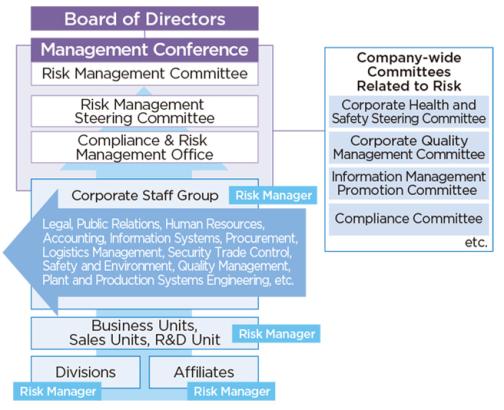
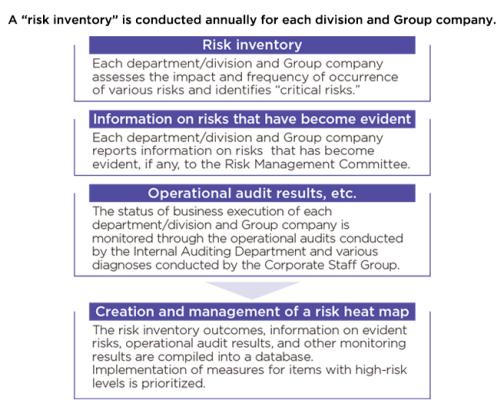
For Group-wide risks, including climate- and nature-related risks, each division and Group company conducts an annual “risk inventory” to identify significant risks after comprehensively evaluating factors such as impact and likelihood of occurrence. Risks deemed significant across the entire company are reported by the Compliance and Risk Management Office to the Risk Management Committee to ensure shared understanding and to discuss response strategies. Furthermore, committees organized by the corporate staff departments responsible for each risk or by the executive officers in charge of those departments implement countermeasures throughout the Group, while each business division takes the lead in managing risks specific to the conduct of its operations.
Regarding responses to risks such as climate change and natural disasters, the Compliance and Risk Management Office takes a central role in ensuring business continuity, including driving the formulation of Business Continuity Plans (BCPs), minimizing damage during disasters while prioritizing safety, and securing raw materials.
Medium- to long-term material issues such as global environmental conservation, including climate change and nature-related matters, are addressed under the leadership of the GX Promotion Committee, chaired by the President and established under the Sustainability Management Promotion Committee. Safety & Environment Division serves as the central coordinating body, formulating targets and action policies based on deliberations at the "Global Environment Promotion Conference" and in collaboration with the relevant corporate staff divisions. Each business division then establishes its own targets and drives related activities accordingly.
The Group’s Risk Management System and workflow are as follows.
*8 https://sumitomoelectric.com/sustainability/governance/risk
(4)Metrics and Targets
①Metrics
The Group has organized the nature-related metrics in accordance with the core global metrics recommended by the TNFD. The list of indicators is shown in the table below.
Correspondence Table Between TNFD’s Core Global Metrics and the Group’s Disclosures
| Corresponding TNFD Core Metrics no. | Driver of nature change | Metrics | The Group’s Disclosure Content | Disclosure medium |
|---|---|---|---|---|
| ー | Climate Change | GHG Emissions | Greenhouse Gas Emissions (Scopes 1, 2, and 3) Greenhouse Gas Emissions Reduction Rate (Scopes 1, 2, and 3) Energy Consumption Reduction Rate of Energy Sales per Basic Unit Total Installed Capacity of Renewable Energy (solar power generation equipment) CO₂ Emissions from Transportation CO₂ Emissions from Transportation in Japan | CSR Book |
| C2.0 | Pollution/pollution removal | Pollutants released to soil split by type | Groundwater Monitoring | CSR Book |
| C2.1 | Pollution/pollution removal | Wastewater discharged | Wastewater discharge By discharge destination (sewer, rivers, sea, others) Environmental Impact Data for Major Sites: Water Quality (pH, BOD, SS, Mineral Oils, Copper, Zinc, Iron (Soluble), Manganese (Soluble), Chromium, Fluorine, Nickel, Boron) | CSR Book Appendix |
| C2.2 | Pollution/pollution removal | Waste generation and disposal | Reduction Rate of Waste discharge per Basic Unit Amount of Waste Discharge (Total, Simple Incineration/Landfill, Recycling) Breakdown of Simple Incineration and Landfill Amount (General Waste, Waste Liquids, Sludge, Others) Breakdown of Recycled Amount (Recycled materials, Thermal Recovery), Amounts of Valuable Materials, Breakdown of Reuse (Material Recycling + Valuable Materials) Amount (Scrap Metal, Waste Paper, Waste Plastic, Waste Acid, Sludge, Wood Waste, Waste Oil, Others) Waste Recycling Rate Industrial Waste Amount | CSR Book |
| C2.3 | Pollution/pollution removal | Plastic pollution | Amount of Resin in Raw Material INPUT Amount of waste plastic in reuse (material recycling + recoverable materials) | CSR Book |
| C2.4 | Pollution/pollution removal | Non-GHG air pollutants | Emissions of NOx, SOx, and VOCs into the atmosphere Environmental Impact Data for Major Sites: NOx Concentration, Particulate Matter Concentration, and NOx Volume | CSR Book |
| C3.0 | Resource use/replenishment | Water withdrawal and consumption from areas of water scarcity | Water withdrawal volume and percentage of total withdrawal at sites (34 sites) classified as “Extremely High” water stress regions by Aqueduct | CSR Book |
| C3.1 | Resource use/replenishment | Quantity of high-risk natural commodities sourced from land/ocean/ freshwater | Procurement Amounts of copper, aluminum, iron, and resins (raw material purchases) | CSR Book |
The CSR Book is available at https://sumitomoelectric.com/csr-reports/.
The Group will continue to explore metrics and targets related to the identified risks and opportunities and other TNFD Core Global Metrics not listed above.
②Targets and Results
In the “Sumitomo Electric Group 2030 VISION,” our long-term vision formulated and announced in May 2022, the Group has adopted the slogan “LIVING IN SAFETY AND COMFORT ON OUR GREEN PLANET ―Relentlessly challenging ourselves to use Technology for Good” and emphasizes its commitment to contributing to a “Green and Environmental Society.”
Furthermore, following the “Mid-term Management Plan 2025”—which served as the first step toward our 2030 milestones—the Group formulated and announced the “Mid-term Management Plan 2028” in May 2026 as the second step, extending through 2028. Within this plan, the Group has set the following climate and nature-related targets.
a. Climate Change
| Item | Time Horizon | Target | FY2025 Results |
|---|---|---|---|
| CO₂ Emissions | 2050 | ●Scope1+2:Carbon Neutrality | Scope1+2:Emissions: 1,454 thousand tCO2e |
| CO₂ Emissions Reduction Rate | 2030 | ●Scope1+2:50.4% reduction (compared to FY 2018) ●Scope3:36.0% reduction (compared to FY 2018) | Scope1+2:28.5% reduction Scope3:0.6% reduction |
| CO₂ Emissions Reduction Rate | 2028 | ●Scope1+2:30% reduction (compared to FY 2018) ●Scope3:22% reduction (compared to FY 2018) |
Regarding CO₂ emissions reduction, the Group actively promoted energy conservation and the adoption of renewable energy, achieving a 28.5% reduction in Scope 1+2 emissions compared to fiscal year 2018. In terms of energy conservation, by reducing the three major sources of energy waste (air leaks, standby power, and heat dissipation losses), the Group has reduced energy consumption per basic unit * by 28.5% compared to the average for fiscal years 2021–2022. Furthermore, the Group has completed the installation of 91.6 MW of renewable energy across the entire Group and will continue to expand the adoption of solar power generation. While Scope 3 emissions were reduced by only 0.6% due to the impact of increased production volume, the Group is requesting that business partners—particularly those whose emissions stem largely from purchased goods and services—submit annual emissions reports and commit to continuous reduction. The Group is also focusing on reducing emissions from logistics. Notably, logistics CO2 emissions per basic unit* of logistics in Japan has been reduced by 14.7% compared to fiscal year 2018. The Group will continue to promote initiatives aimed at achieving our targets.
b. Circular Economy
| Item | Time Horizon | Target | FY2025 Results |
|---|---|---|---|
| Promoting the Circular Economy | 2028 | ●Promotion of the use of recycled materials (copper, aluminum, rare metals, resins, etc.) ●Product design and material development for easy recycling ●Waste reduction by reducing defects and sorting, water recycling | Waste Recycling Rate*: 92.5% Reduction of waste discharged per unit of sales *: 15.8% (compared to FY2022) Reduction of water use per unit of sales *: 21.4% reduction (compared to FY 2022) |
*Excluding the Sumitomo Riko Co., Ltd. Group
In promoting the circular economy, the Group is working to reduce defects in production, reduce the amount of waste generated, reuse waste within the Group and turn it into valuable resources, recycle raw materials, and reduce water consumption and promote water resource recycling. As a result, the waste recycling rate* stands at 92.5%, reduction of waste discharged per unit of sales * has decreased by 15.8% compared to fiscal year 2022, and reduction of water use per unit of sales * has decreased by 21.4% compared to fiscal year 2022.
Going forward, the Group continue to advance the use of recycled materials in our products and the development of recycling technologies themselves.
c. Prevention of Environmental Pollution
| Item | Time Horizon | Target | FY2025 Results |
|---|---|---|---|
| Prevention of Environmental Pollution | 2028 | ●Zero environmental incidents, ●Reduction of environmentally hazardous substances | Environmental incidents/accidents*: 3 cases Reduction of emissions of PRTR-designated chemical substances (in Japan) *: 32.8% (compared to FY2022) |
*Excluding the Sumitomo Riko Co., Ltd. Group
The Group is committed to managing chemical substances contained in its products, communicating information on chemical substances throughout the supply chain, managing chemical substances used in manufacturing at its factories, and reducing the amount of hazardous chemical substances released into the environment, with the aim of complying with laws and regulations, protecting the health and safety of its employees, contributing to environmental conservation, and earning the trust of its customers and consumers. In terms of reducing environmentally harmful substances, the Group reduced emissions* of PRTR-designated chemical substances by 32.8% compared to fiscal year 2022.
On the other hand, in fiscal year 2025, one case of turbid wastewater leakage outside the premises and two cases of wastewater exceeding standard values were reported from overseas affiliates. All of these cases have been reported to the administrative authorities. In the former case, since nobody noticed the alarm when it was triggered, the following countermeasures have been taken: adding areas where staff are permanently stationed at the alarm locations and sending email notifications to mobile phones. In one of the latter cases, although the internal analysis prior to release showed values below the standard, the subsequent external analysis confirmed that the values exceeded the standard. As a countermeasure, the procedures have been revised to release wastewater only after both internal and external analyses confirm that levels are below the standard. For the other case, in addition to enhancing employee training, measures have been taken to strengthen the wastewater quality management system, such as increasing the frequency of analyses.
d. Global Environmental Conservation and Biodiversity
| Item | Time Horizon | Target | FY2025 Results |
|---|---|---|---|
| Nature-Related Disclosure | 2028 | ●Assessment and disclosure based on the TNFD framework | Disclosure of the results of the LEAP approach scoping (determination of the scope of the assessment) |
| Contribution to the Global Environment Through Our Business Activities | 2028 | ●Green and digital-related products Net sales of 3.5 trillion yen (FY 2028) | ― |
| Expansion of local eco-activities such as biodiversity preservation and community cleanup | 2030 | ●Promotion of “Eco-Activities 2030” Over 300 “Good for the Planet” activities per year in over 20 countries and regions ahead of FY2030 (strengthening of initiatives in collaboration with regional communities) | Eco-Activities 2030*: 356 activities per year across 19 countries/regions |
*Excluding the Sumitomo Riko Co., Ltd. Group
As part of “Eco-Activities 2030,” which aims to restore nature through initiatives such as biodiversity preservation and local environmental protection, the Group carried out a total of 356 activities in 19 countries and regions in fiscal year 2025. Furthermore, regarding its contributions to the global environment through our business operations, while it has been expanding its lineup of “Green Contribution” and eco products, under the “Mid-term Management Plan 2028,” the Group has established a new indicator—“Sales of Green and Digital-Related Products”—and is working toward achieving sales of 3.5 trillion yen.
Future Outlook
In fiscal year 2025, the Group prioritized the power cable business in the “Environment & Energy”—a high-priority business segment given the large volume of copper raw materials procured, which has significant impacts on nature —and conducted analyses in line with the LEAP approach.
As part of the “Prepare” phase (preparing to address and report on identified issues), this disclosure organizes the nature-related dependencies, impacts, risks, and opportunities identified through this analysis, with the aim of sharing them with the Group’s stakeholders.
Starting in fiscal year 2026, the Group plans to conduct similar analyses for products related to the “Automotive” segment, which accounts for a high net sales ratio of the Group. In addition, the Group plans to further enhance our disclosures regarding climate, nature, and biodiversity, and reflect measures to address the identified issues in its business strategies and sustainability-related policies.
SEG, which upholds the principles of“Goho Yoshi” (Five-Way Win), will continue to promote initiatives aimed at sustainable growth and enhancing corporate value, with the goal of coexisting with the rich natural environment.