Featured Stories
Why LDES Matters for the Grid
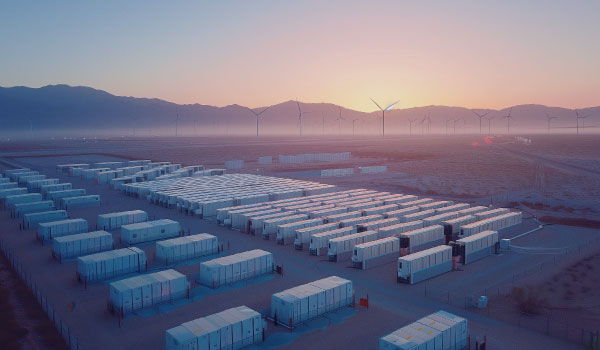
As power systems integrate higher levels of renewable energy, the challenge facing the grid is no longer only how quickly electricity can be delivered, but how long it can be supplied reliably.
Short-duration battery energy storage systems—typically designed for around four hours of discharge - play an important role in peak shaving and fast-response grid services. However, they are not always sufficient when supply–demand mismatches persist for many hours or when grid infrastructure expansion lags behind renewable deployment.
Long-duration energy storage (LDES) addresses these challenges by enabling multi-hour energy shifting, supporting prolonged demand, and improving system flexibility. This article explains why LDES matters for the grid, the limitations of short-duration storage alone, and how LDES technologies (including flow batteries) can help stabilize power systems by addressing energy challenges that occur over longer time horizons.
◇ Why is long-duration energy storage becoming important?
Historically, power systems have focused on how quickly electricity can respond to changes in demand.
Today, that focus is expanding to include how long electricity can be supplied when imbalances persist over extended periods.
As renewable energy generation grows, the timing of electricity supply does not always align with demand. Long-duration energy storage plays a critical role in managing these time-based mismatches by shifting energy across hours, rather than minutes.
◇ What challenges is today’s power grid facing?
Power grids in the United States and other regions are facing several structural challenges at the same time:
- Increasing variability in generation due to higher renewable penetration
- Concentrated demand during specific hours, such as evenings and early mornings
- Delays in transmission expansion and grid interconnection
According to the U.S. National Renewable Energy Laboratory (NREL), as renewable penetration increases, short-duration flexibility alone becomes insufficient to maintain system balance.
These challenges highlight that grid reliability is increasingly shaped by when energy is available, not just how much energy is generated.
◇ Why short-duration storage alone is not enough
These energy storage systems are widely deployed and highly effective for:
- Short-duration peak shaving
- Fast-response grid services such as frequency regulation
However, their limited discharge duration can become a constraint when:
- Excess renewable generation persists for many hours
- Electricity demand remains elevated over extended periods
NREL notes that as the temporal gap between renewable generation and load widens, longer-duration storage becomes more important.
◇ Lessons from regions with rapid renewable growth
In some regions, including parts of South America, grid infrastructure has expanded more slowly than renewable capacity, leading to significant periods of excess generation. In these cases, electricity has sometimes been curtailed not because it was unnecessary, but because available storage duration was insufficient to shift energy over longer time horizons.
Short-duration batteries can help manage short peaks, but when excess generation persists for many hours, storage limited to four hours may not be able to fully absorb it. These experiences illustrate why longer-duration energy storage is increasingly viewed as a necessary complement as renewable penetration rises.
◇ How LDES helps stabilize the grid
LDES addresses time-based grid challenges by enabling:
- Continuous energy supply over multiple hours
- Shifting excess daytime generation to evening or nighttime demand
- Supporting system operation during periods of grid constraint
Rather than responding only to short-term fluctuations, LDES helps manage energy imbalances that occur over longer time scales, improving overall system flexibility and resilience.
◇ Where flow batteries fit into LDES solutions
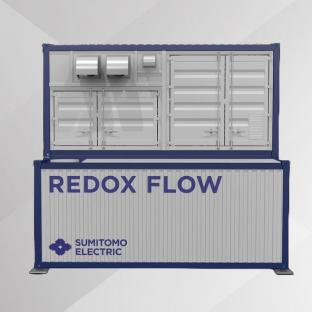
Multiple technologies can provide long-duration energy storage, and flow batteries represent one option designed specifically for extended discharge applications.
In flow battery systems:
- Power capacity (kW) is determined by the size of the cell stack
- Energy capacity (kWh) is determined by the volume of electrolyte stored in external tanks
This separation allows energy capacity to be expanded more easily for longer-duration operation. In addition, flow batteries are often considered for LDES applications because they offer:
- Minimal performance degradation from frequent cycling
- Water-based, non-flammable electrolytes that support a strong safety profile
These characteristics make flow batteries a practical option for stationary, long-duration grid applications where safety, durability, and extended operation are important.
◇ FAQ
Why does the grid need long-duration energy storage?
As renewable energy deployment increases, mismatches between generation and demand can last for many hours. Long-duration energy storage helps shift energy across these time periods and maintain grid reliability.
Does LDES replace short-duration battery storage?
No. Short-duration storage and LDES serve different roles and are most effective when used in a complementary manner, depending on the time scale of the grid challenge.
◇ Conclusion
Long-duration energy storage is not simply about adding more battery capacity. It is about addressing time-based challenges that are becoming increasingly important as power systems evolve.
As renewable energy adoption continues to grow, the ability to store and deliver energy over longer periods will play a critical role in building reliable, flexible, and resilient grids.
References:
- National Renewable Energy Laboratory(NREL). (September 2019). Grid-Scale Battery Storage.
- National Renewable Energy Laboratory(NREL). (2025 March 31). Exploring the Future Energy Value of Long-Duration Energy Storage.
Follow us on LinkedIn!
If you enjoyed this Feature Story, be sure to follow Sumitomo Electric U.S.A on LinkedIn. We share updates there whenever new stories are published. (Note: Sumitomo Electric Group also has a global LinkedIn account for corporate updates.)