Special Features
Discover the unique benefits of vanadium redox flow batteries (VRFBs), a cutting-edge energy storage solution that offers superior safety, sustainability, and efficiency compared to traditional battery technologies. Learn why redox flow batteries are the preferred choice for large-scale energy storage and grid stability.
Long Lifespan and Durability
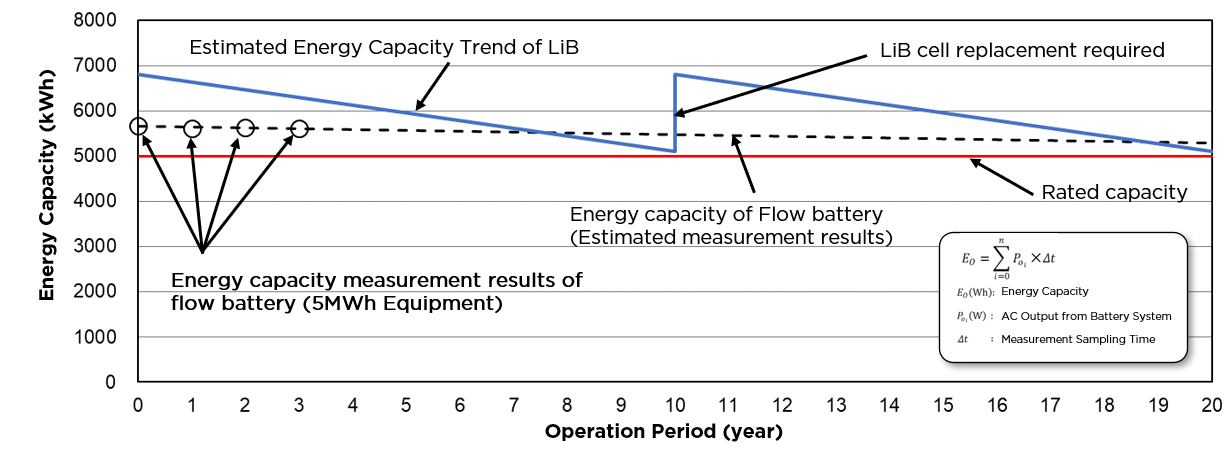
- 30-Year Operational Lifespan: Designed for long-term reliability with minimal degradation. With appropriate maintenance, the system can operate for up to 30 years.
- No Cycle Limitation: The system is designed to support frequent charge-discharge operation without a specified cycle limitation.
- Long-Term Reliability: Long-life materials support reliable energy storage over an extended operating life and help reduce replacement requirements.
Safety and Fire Resistance
- Non-Flammable Electrolyte: The electrolyte is non-flammable, providing an inherent safety advantage for large-scale energy storage applications.
- Flame-Retardant Components: All other system components are made from flame-retardant materials to support safe operation.
- Integrated Safety Protection: The Battery Management System monitors key conditions and provides protection against DC overvoltage, DC overcurrent, electrolyte overpressure, high temperature, and external electrolyte leakage.
- Code Compliance: UL 9540, UL 9540A, UL 1973, IEC 62932, IEC 62933, CE, REACH, and NFPA 855.

Environmentally Friendly
- Long-Life Design: Designed for long-term reliability with minimal degradation, helping extend system life and reduce replacement requirements.
- Reusable Electrolyte: The vanadium electrolyte can be reused, supporting more efficient use of resources over the system lifecycle.
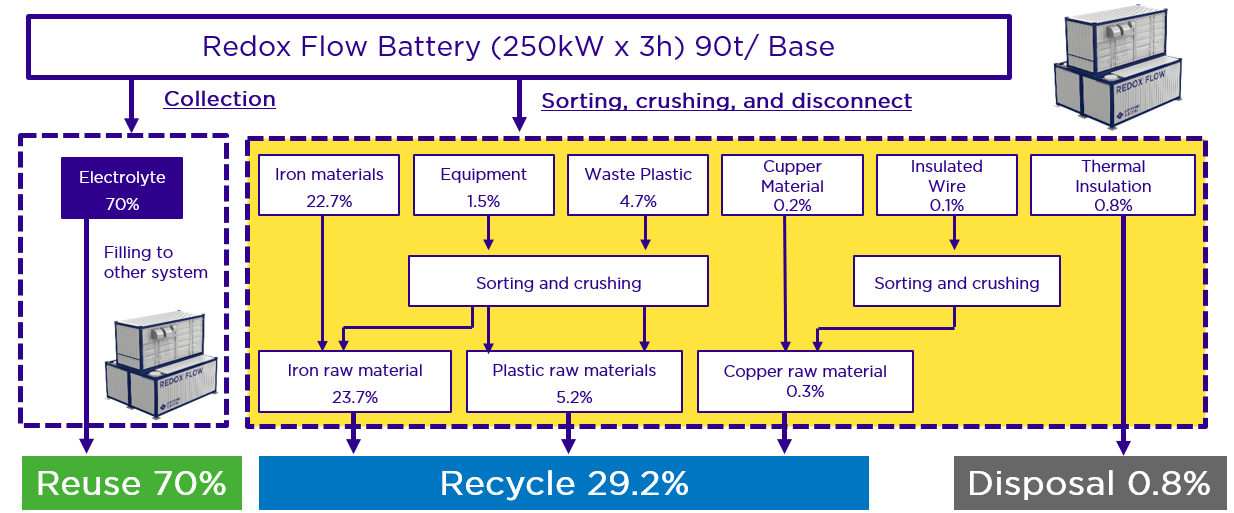
- Highly Recyclable System: Approximately 99% of system materials can be recycled, helping minimize waste at the end of operation.

High Reuse and Recycling Rate
- 99% Recyclable System Materials: Approximately 99% of system materials can be recycled, helping minimize waste at the end of the system lifecycle.
- Reusable Electrolyte: The electrolyte can be reused, supporting resource efficiency and reducing materials requiring disposal.
- Minimal Waste at Decommissioning: The system is designed to minimize waste at decommissioning, contributing to lower lifecycle environmental impact.

Scalability and Flexibility
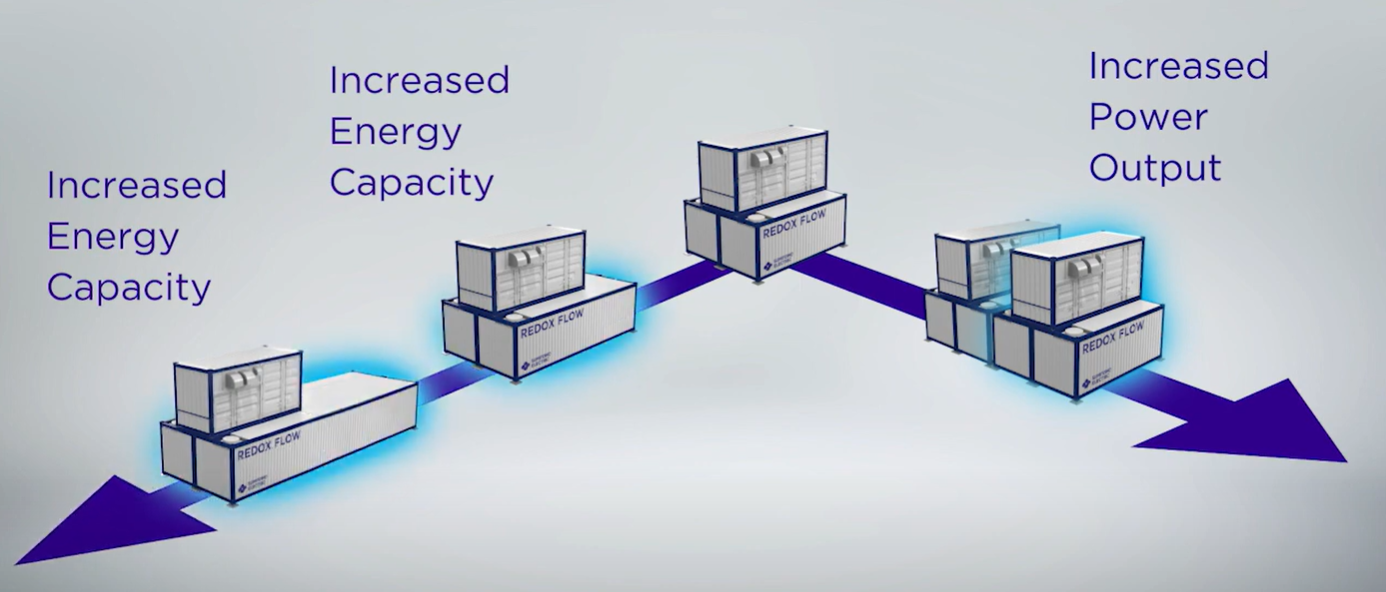
- Flexible System Design: Power output and energy capacity can be configured to meet a wide range of project requirements.
- Customizable Energy Capacity: Energy capacity can be increased by expanding the volume of electrolyte or the size of the electrolyte storage tanks.
- Flexible Power Output: Power output can be adjusted by configuring the required battery modules and cell stacks.
- Extended Duration: System configurations from 6 to 12 hours support a wide range of long-duration energy storage requirements.

Low Life Cycle Costs
- Long-Life Design: Designed for long-term reliability with minimal degradation, supporting a long operational life.
- No Cell or Electrolyte Replacement: The long-life system design eliminates the need for cell or electrolyte replacement during normal long-term operation with appropriate maintenance.
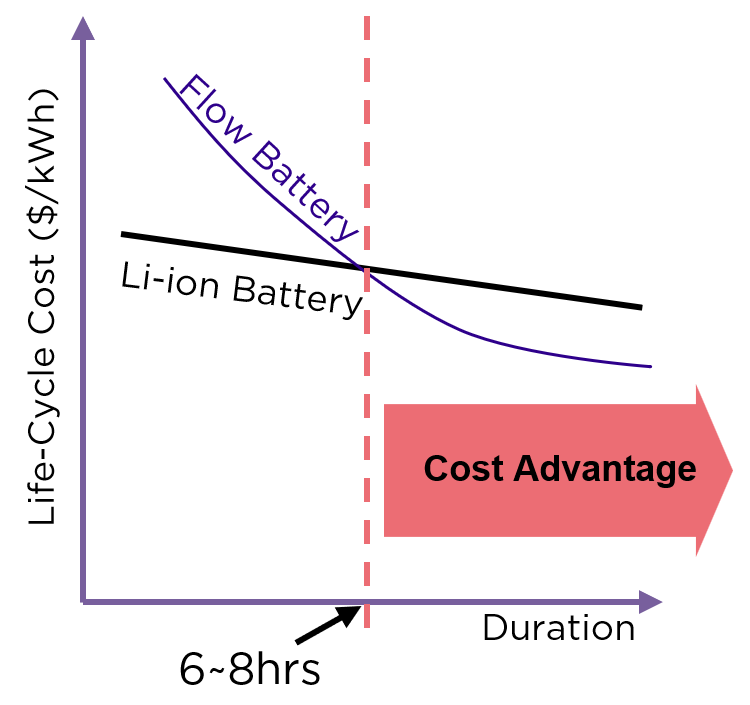
- Cost Advantage for Long-Duration Storage: VRFBs are well suited for long-duration configurations where lifecycle economics become increasingly important.
- Minimal Waste at Decommissioning: Reusable electrolyte and highly recyclable system materials help minimize waste at the end of operating life.
- Flexible Capacity Expansion: Energy capacity can be expanded by increasing electrolyte volume or tank capacity to meet changing project requirements.

Long-Duration Energy Storage
- Flexible Discharge Duration: Energy capacity can be increased by adjusting electrolyte volume and system configuration to meet long-duration storage needs.
- 6- to 12-Hour Configurations: System configurations include 6-hour, 8-hour, 10-hour, and 12-hour storage options.
- Long-Duration Cost Advantage: Long service life and minimal replacement requirements support low lifecycle costs in long-duration configurations.
- Utility-Scale Applications: VRFBs are well suited for utility-scale and long-duration energy storage, including renewable energy integration, microgrids, and backup power applications.

Easy Operation
- State of Charge (SoC) Monitoring: The Battery Management System monitors cell stack conditions, including DC voltage and state of charge.
- No Cycle Limitation: The system has no specified limitation on the number of charge-discharge cycles, supporting applications that require frequent cycling.
- Integrated Monitoring and Protection: The BMS monitors electrolyte temperature, pressure, fluid circulation, and cell stack status while coordinating with the PCS and EMS.
- Communication and Remote Monitoring: EMS and PCS communication is supported through Modbus/TCP, with remote monitoring available as an option.
Why Choose Sumitomo Electric for Vanadium Redox Flow Batteries?
Founded in 1897, Sumitomo Electric brings more than a century of engineering expertise and has been advancing redox flow battery technology since 1982.
Our advantages include:
1. Proven Reliability: Our San Diego VRFB has been in operation since 2017 and achieved 99% operational availability over the final two years of the demonstration.
2. Financial Strength: Sumitomo Electric achieved FY2025 net sales of ¥5.11 trillion (approximately $31.9 billion) and operating income of ¥418.2 billion, supported by strong credit ratings.
3. Innovation Leadership: Sumitomo Electric invested ¥162.9 billion (approximately $1.0 billion) in R&D in FY2025, supporting continuous technological advancement.
4. Quality and Safety: Our VRFB technology has been proven through utility-scale deployments and is designed to meet key safety and code requirements for large-scale energy storage.
Choose Sumitomo Electric for proven VRFB technology backed by decades of R&D, global scale, and long-term financial strength.