Infocommunications
Optical Communication Technology
Ultra-Low-Loss Silica-Core Optical Fiber
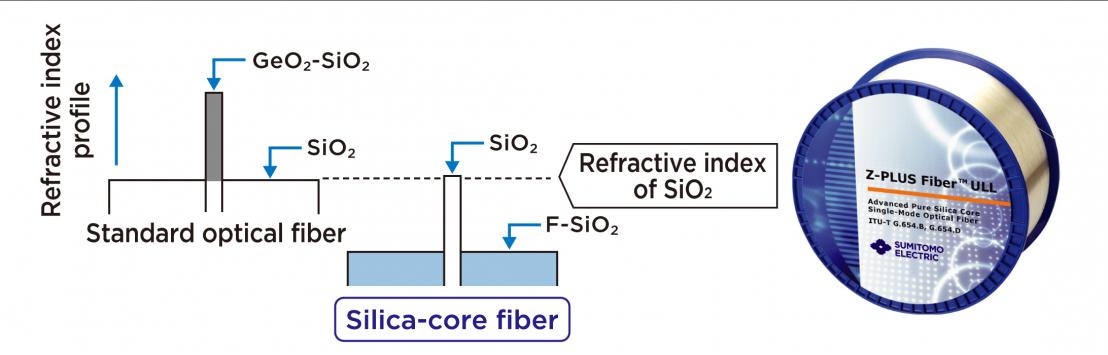
We have been developing the vapor-phase axial deposition (VAD) method, since the early 1970s, and have expanded it into a mass production technology. Among our products, the ultra-pure silica-core fiber is optimal for high-speed, high-capacity digital coherent communication systems.
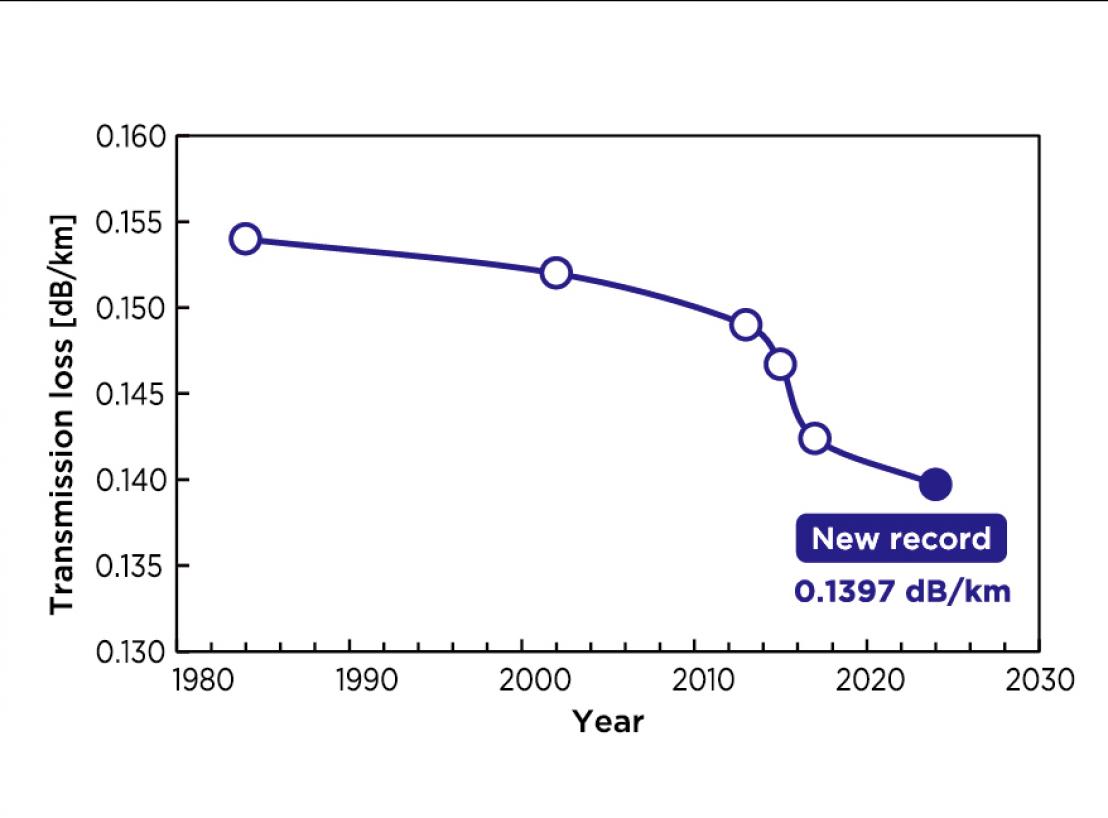
In March 2024, we achieved a world-record transmission loss of 0.1397 dB/km (at a wavelength of 1566 nm).


Innovative Multi-Core Optical Fiber and Connectivity Technology
To support the development of next-generation high-capacity optical networks, we are advancing multi-core fiber (MCF) technology. Sumitomo Electric’s MCF significantly increases transmission capacity while reducing transceiver power consumption, thereby helping to expand the information infrastructure while minimizing environmental impact.
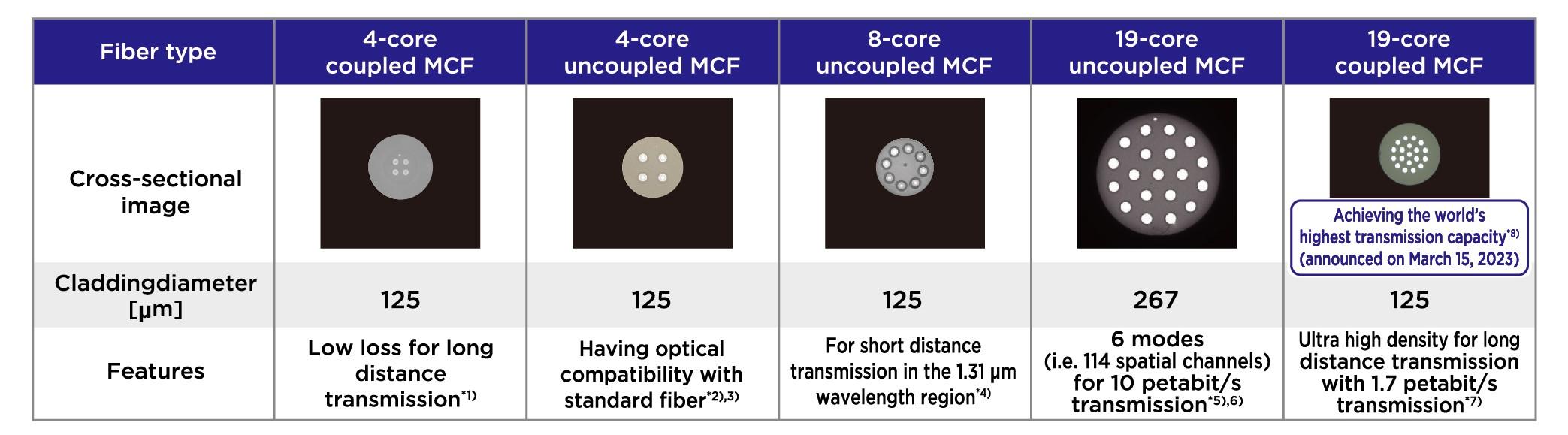
1)Sumitomo Electric Has Developed Coupled Multi-Core Optical Fiber Suitable for Ultra-Long-Haul Transmission
2)World’s Largest Transmission Capacity with Standard Diameter Multi-Core Optical Fiber: Accelerate Multi-Core Fiber Application using Current Standard Technology (NTT, Inc.)
3)World’s Largest Transmission Capacity with Standard Diameter Multi-Core Optical Fiber: Accelerate Multi-Core Fiber Application using Current Standard Technology
4)Sumitomo Electric Has Developed New-type Multi-Core Optical Fiber for Optical Interconnects and Realized Highest-Density Multi-Core Fiber Optic Cable
5)Success of ultra-high capacity optical fiber transmission breaking the world record by a factor of five and reaching a 10 Petabits per Second (KDDI Research, Inc.)
6)Success of ultra-high capacity optical fiber transmission breaking the world record by a factor of five and reaching a 10 Petabits per Second
7)Sumitomo Electric and NICT Develop the World's First 19-core Optical Fiber with Standard Outer Diameter and Set New World Record for Transmission Capacity
8)Standard cladding diameter (125µm) optical fiber conditions
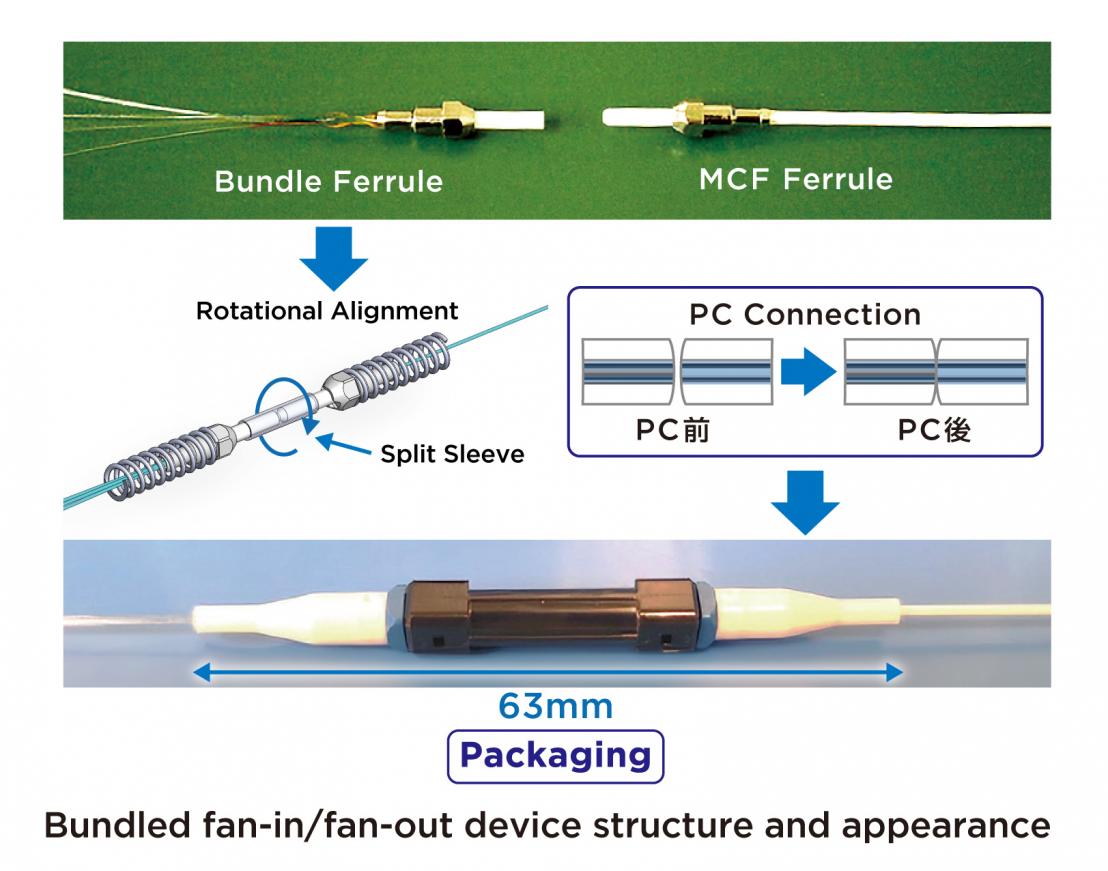
SUMITOMO ELECTRIC TECHNICAL REVIEW: "Fiber Bundle Fan-in/Fan-out for Four-Core Multi-Core Fiber"
High-Capacity Optical Interconnection for Data Centers
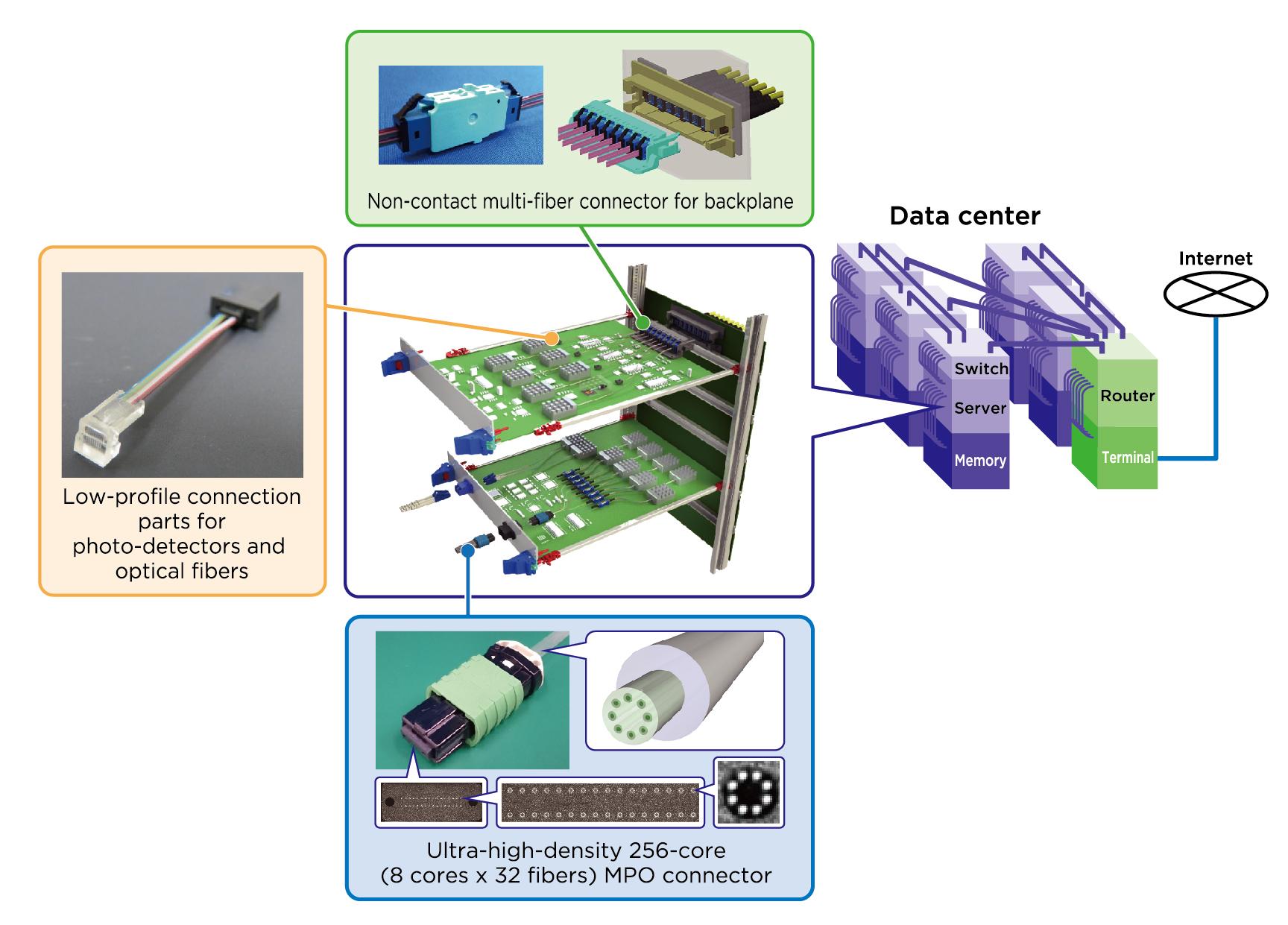
With the evolution of AI and cloud computing, optical cabling is being adopted in data centers to support higher speed and lower power consumption. Applying our expertise in optical fiber technology, we have developed low-insertion-force multi-fiber connectors and ultra-low-loss connectors to support large-scale interconnects.
All-Photonics Network
To meet the growing demand for high-speed, low-latency, energy-efficient data communications, All-Photonics Network—which replaces the conventional optical-electrical-optical conversion—is gaining attention.
Sumitomo Electric is striving to research and develop core components such as optical transceivers (APN-T) and switching equipment (APN-S and APN-G), while also contributing to technical standardization through offering proposals at the IOWN Global Forum™.
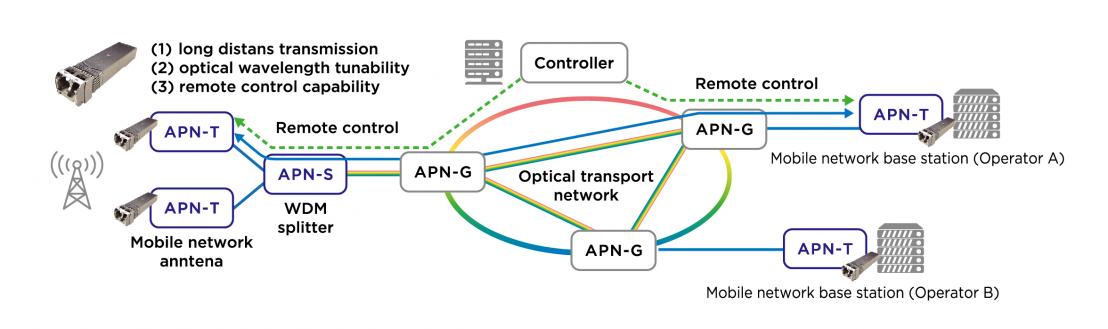
Aiming for All-Photonics Networking between base stations and antennas in mobile networks, Sumitomo Electric is committed to researching and developing optical transceivers (APN-T) and wavelength-multiplexing splitters (APN-S) that are capable of long-distance transmission, wavelength conversion, and remote control. These devices feature the capability to connect any network device to an All-Photonics Network.
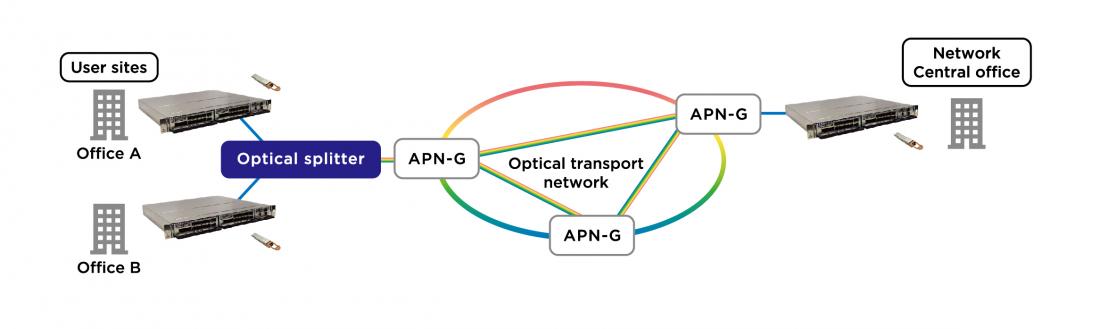
Sumitomo Electric is also focusing our efforts on R&D of coherent transmission systems capable of 400 Gbps-class throughput over existing optical fiber infrastructure. Since these systems support point-to-multipoint communication and can coexist with FTTH services such as 10G-EPON, we are promoting its application in networks connecting corporate sites.
Metro/DCI Ethernet Switch
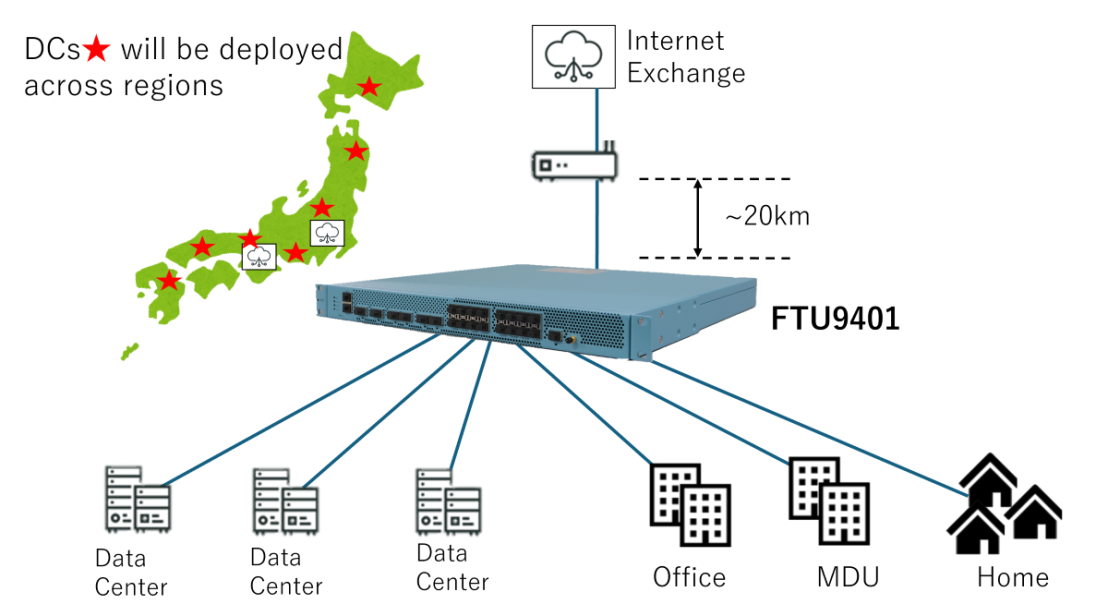
Data centers are currently concentrated in specific locations. Going forward, there is a growing need to diversify deployments and expand them beyond major areas into a more distributed model.
In this context, Data Center Interconnect (DCI)—connecting distributed data centers to regional communication networks and delivering the performance required—is becoming increasingly important.
To support this distributed architecture, we are developing the Ethernet Switch (FTU9401), designed to integrate a distributed data center network with regional communication networks through DCI.
Optical Communication Devices
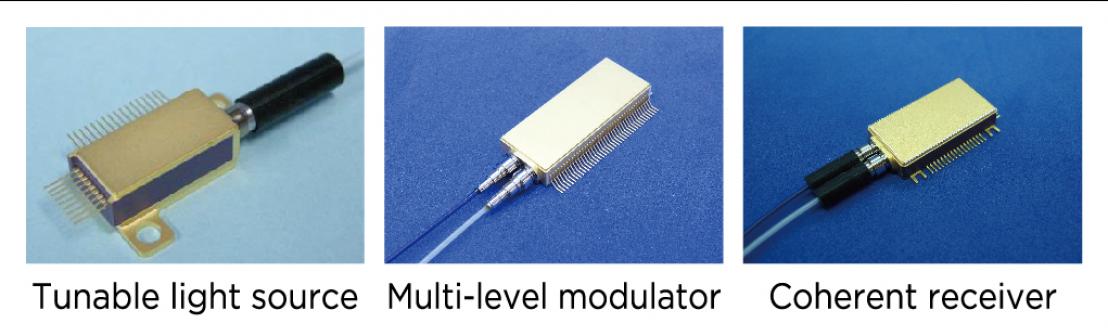
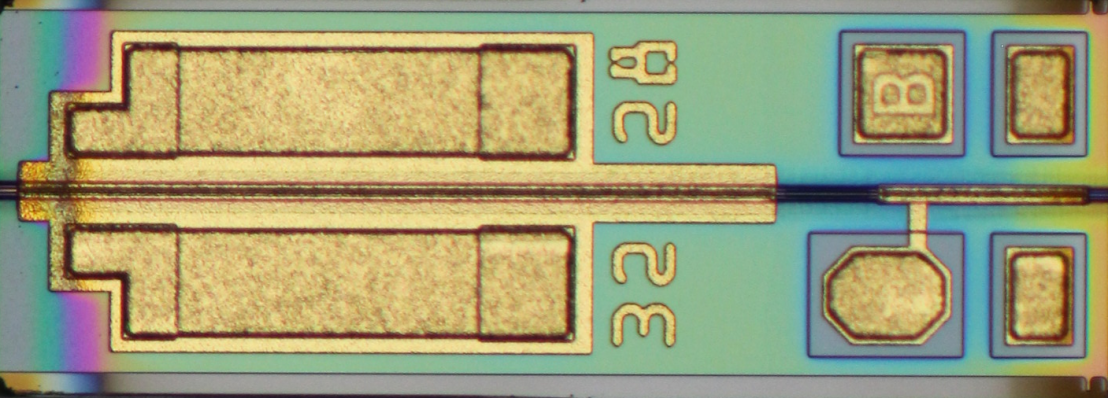
We develop key technologies and devices that convert between electrical and optical signals. For access and data center networks, we focus on modulator-integrated distributed feedback (DFB) lasers and high-power DFB lasers. For backbone networks, we are developing essential components for digital coherent systems, with an emphasis on miniaturization, low power consumption, and higher speed.
Wireless Communication Technology
Analog RoF and Distributed Antenna System (DAS)
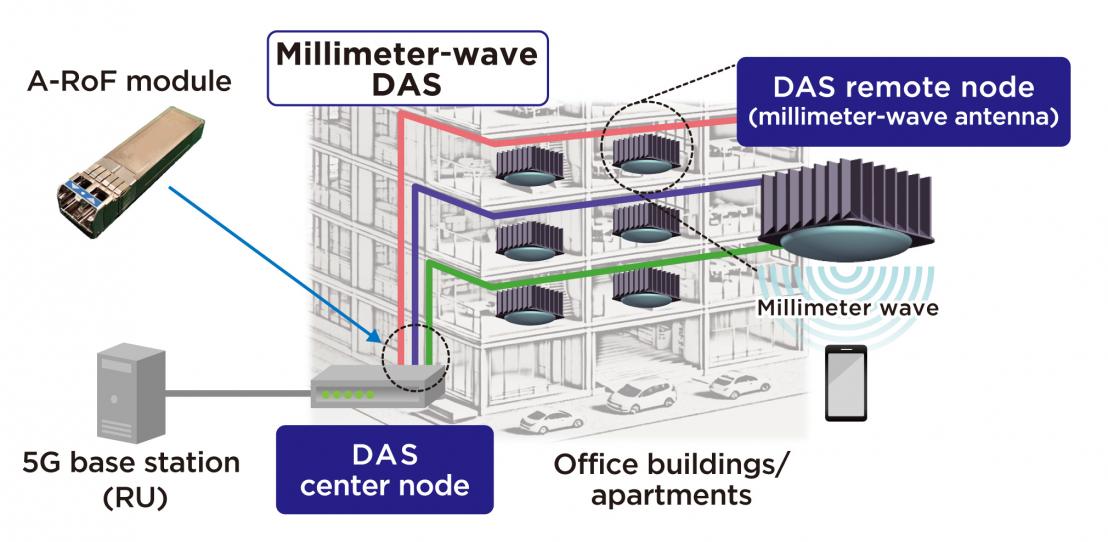
We have developed a proprietary analog radio-over-fiber (RoF) technology that enables transmission of 5G millimeter-wave signals over optical fiber. Our distributed antenna system (DAS) for 5G base stations achieves a 90% reduction in antenna size and a 50% reduction in power consumption compared to conventional systems, supporting the broader deployment of 5G mmWave networks.
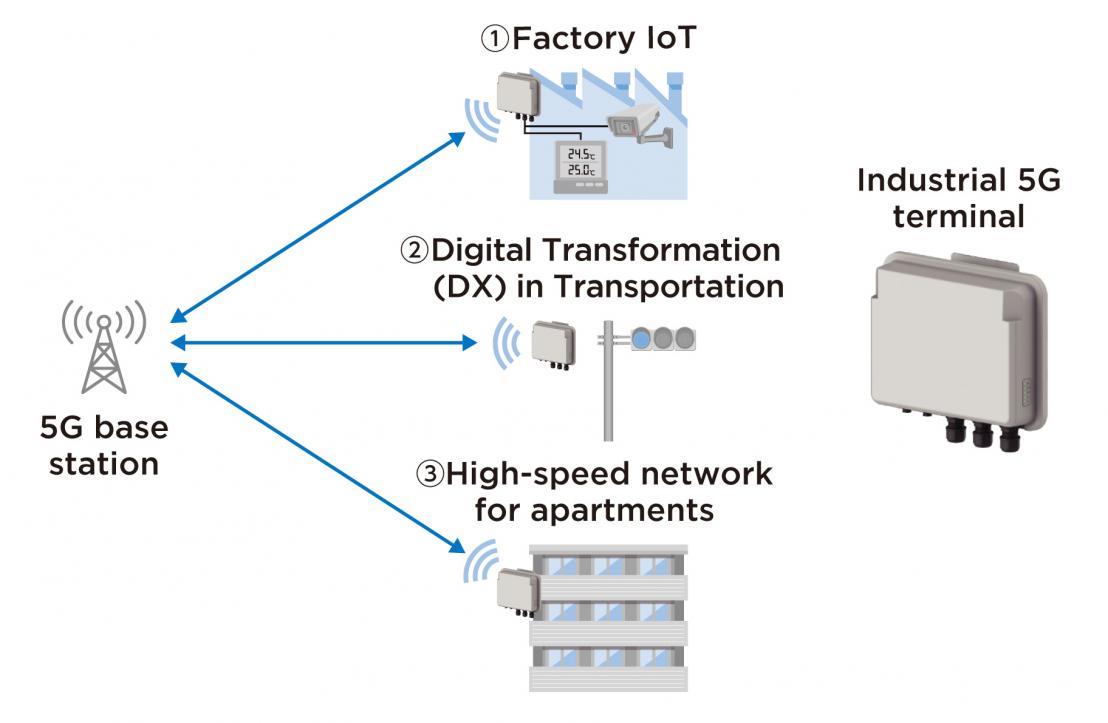
Industrial 5G Terminals
We are developing industrial 5G terminals capable of ultra-high-speed, high-capacity data transmission. Equipped with edge computing capabilities, these terminals enable smart factory IoT and digital transformation (DX) in transportation.
Wireless Communication Devices
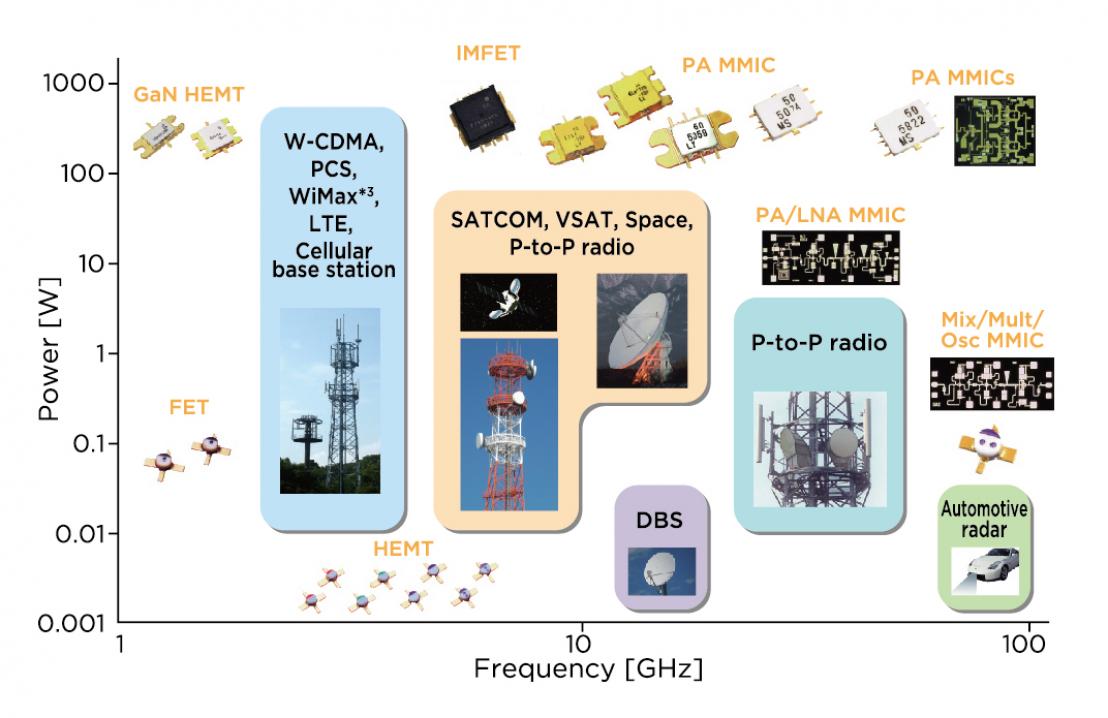
We are developing high electron mobility transistors (HEMTs) using gallium nitride (GaN), significantly enhancing the miniaturization and energy efficiency of base station equipment. Our goal is to advance high-frequency, high-efficiency devices for next-generation wireless applications, including inter-base station links, satellite communications, and solid-state radar systems.